Historical background and roots of tradition
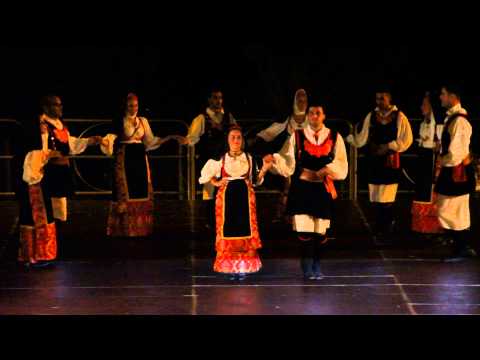
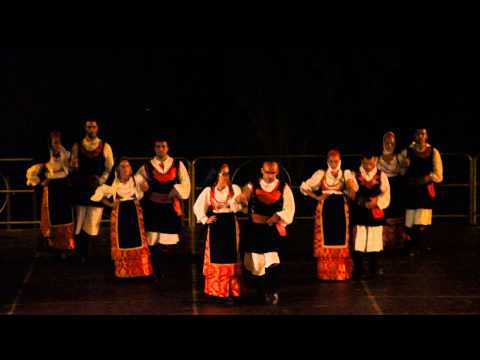
Bauladu, known in Sardinian as Baulàdu (historically also badu ladu), is a village of the Campidano di Oristano, in the Province of Oristano. The name derives from the Sardinian words bau (or badu) and ladu, literally meaning “wide ford”: a topographical designation drawn from the Latin vadum latum, recalling the ancient ford on the Rio Cìspiri, the watercourse that runs through the municipal territory. Located in the Campidano plain a few kilometres from Oristano, Bauladu is a small village of ancient agricultural tradition that has preserved over the centuries a deep bond with the land and with the seasonal cycle of farming. The surrounding area, rich in wetlands, bears witness to human presence since the Nuragic age. In the Middle Ages the village was part of the Giudicato of Arborea, the longest-lived of the medieval Sardinian kingdoms, which helped forge local culture and the character of communal traditions. Today Bauladu keeps its intangible heritage alive through its folk group, which wears the traditional dress at the main civic and religious celebrations.
Women’s dress
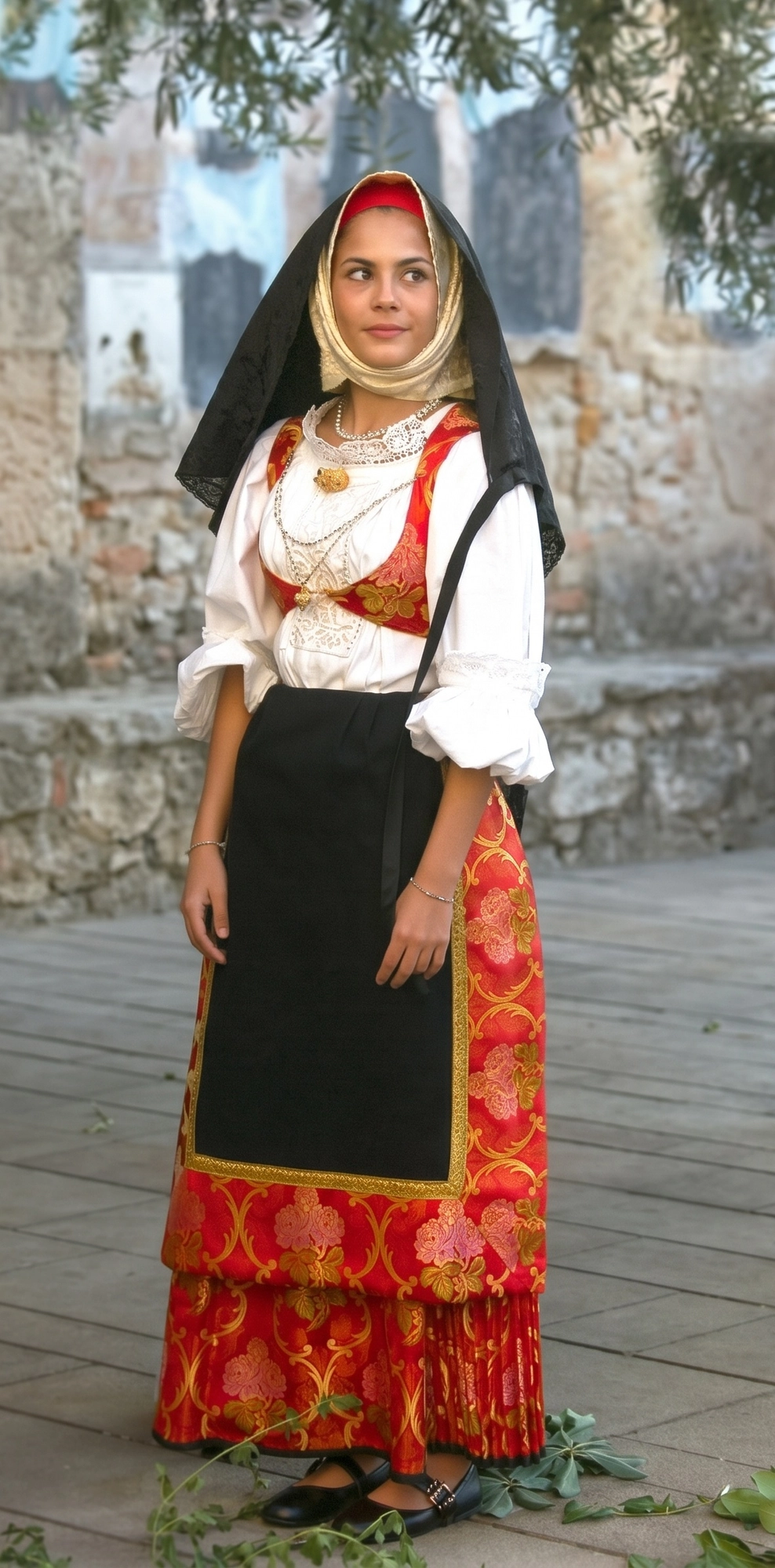
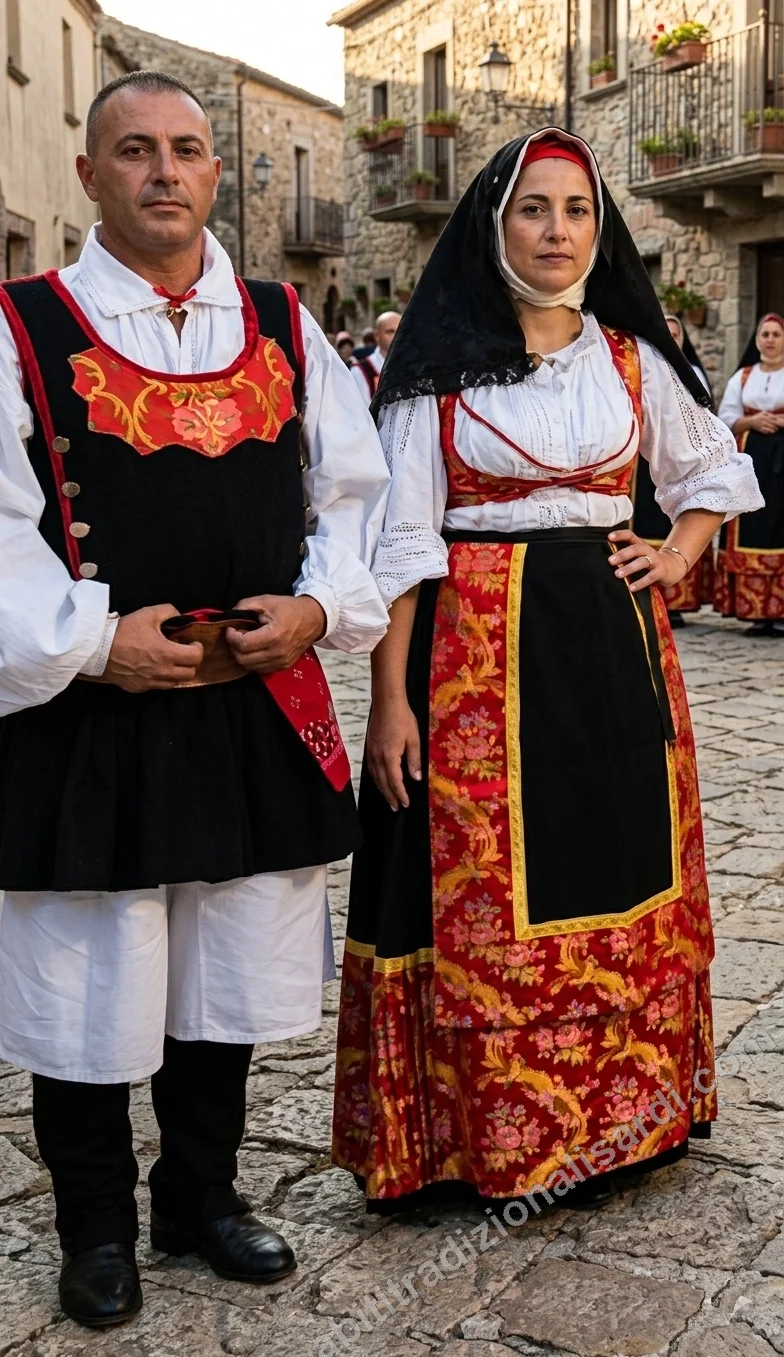
The women’s festive dress of Bauladu is built up in layered elements. On the head is worn the iscaffiottu, a red cotton bag-shaped bonnet that gathers the hair and is tied at the nape of the neck. Over it is placed the muccadore ‘e seda grogu, a square yellow silk handkerchief with floral motifs, folded into a triangle with the ends crossed under the chin and fastened inside at ear level. For the prioresses, on particular religious occasions, the panneddu de lustrinu is added — a head apron in black printed floral satin, edged with black lace.
At the bodice, the camisa is a white linen shirt finely embroidered by hand on the chest and along the neckline, long enough to serve also as an underskirt. Over it is worn the imbustu, a black broccatello bodice with golden and orange floral motifs, laced at the front with a ribbon. Completing the bodice, the zipponi — a black jacket in figured satin with floral motifs — closes at the front with hooks and eyes.
The skirt — the unnedda — is black broadcloth, pleated except for the front panel covered by the apron; it is enriched by a wide frill in red broccatello with golden floral motifs, finished with gold braid. The frill could vary in colour and size according to means and personal taste. The pann’e ananti (apron) is in black broadcloth edged with red broccatello with golden floral motifs. The dress is completed by the crapittas, black leather shoes.
Men’s dress
The men’s festive dress of Bauladu includes headgear, bodice with overjacket and three distinct leg garments. The berritta is a black orbace woollen cap, tubular in shape with rounded edges and about sixty centimetres long; it is worn falling behind the head. At the bodice, the white linen camisa is finely embroidered by hand at the collar, chest and cuffs. The cossu, a black broadcloth waistcoat edged with red velvet, is double-breasted with two rows of buttons, one ornamental, and features an insert of red broccatello with golden floral motifs on the chest. The gabbanu is a black orbace jacket with a hood, with lapels and inserts in black velvet.
For the legs, the cratzones are white linen trousers reaching to mid-calf, worn outside the gaiters. The ragas is a black orbace kilt, pleated at the waist and reaching to mid-thigh; a narrow strip of fabric joins the front and back passing under the crotch. The cratzas, black orbace gaiters, have a red velvet upper edge, cover the calf and end with a rounded hem, hiding part of the shoes. Completing the dress are the crapittas (black leather shoes) and the chintorza, a brown leather belt.