Historical background and roots of tradition
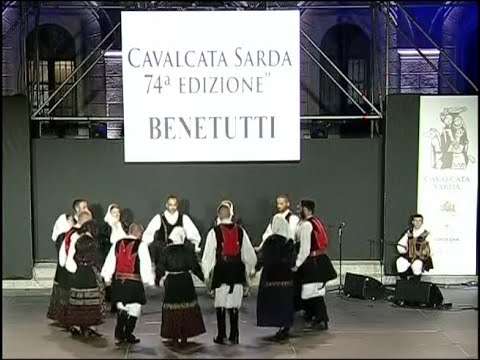
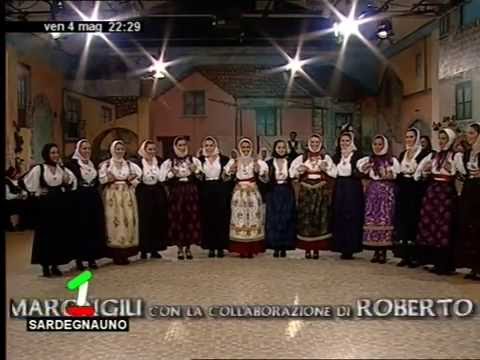
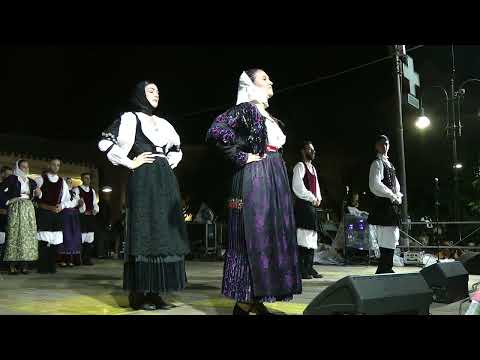
Benetutti, known in Sardinian as Benetùtti, is a village in the Goceano region, in the province of Sassari. Its name is traditionally linked to the Sardinian expression bena de Tudi ("spring or vein of Tudi"), referring to the thermal springs that have marked the area since antiquity. Alternative theories suggest a derivation from the Latin bene tutus ("well protected"), while older sources record the settlement under the name Bullerjana. The village stands on the Goceano plateau, surrounded by pastures and oak woodland, not far from the medieval castle of Burgos and the thermal baths of Santa Maria, which were already frequented in Roman times. Community identity has been preserved across the centuries through pastoral life and the festive occasions where traditional dress, handed down from generation to generation, continues to express the character of the Goceano.
Women’s dress
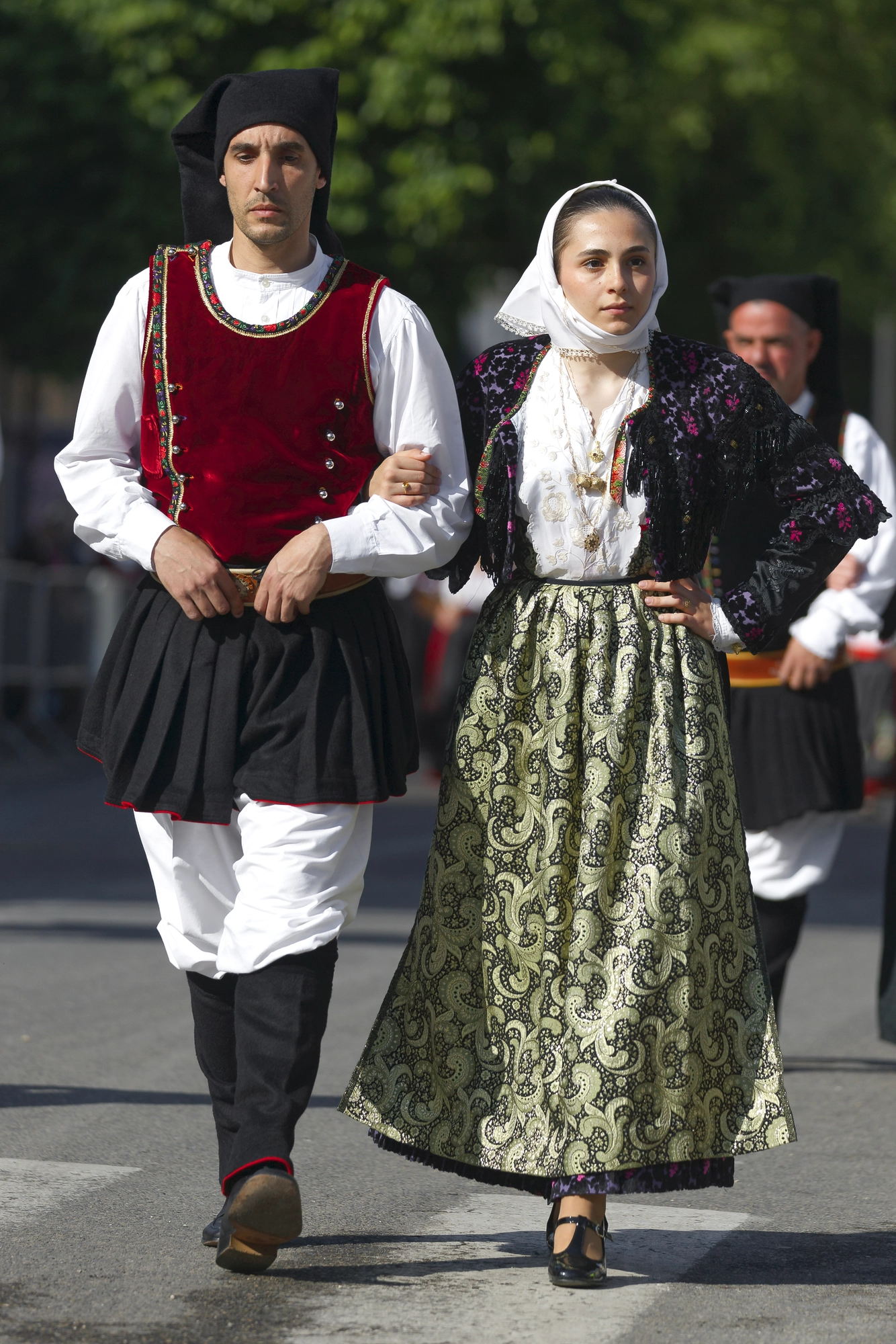
The women’s dress of Benetutti falls into three historical variants. The richest is su corittu of the well-to-do ladies: the head is covered with a white silk headscarf pinned over the black cloth berritta. The shirt (entone) is in white linen, embroidered at the chest and cuffs with polychrome thread. Over it is worn the cosse, a black velvet bodice with floral motifs in red and violet; the zinta, a green silk sash, cinches the waist. The skirt (ragas) is in dark violet jacquard fabric with large brocade flowers; at the lower edge runs a blue cloth band, and the hem is in red velvet. On the feet, the cartzittas, traditional black leather shoes.
The common women’s variant features a white headscarf with a violet fringe and a linen shirt with sleeves richly embroidered in polychrome green and red motifs. The zinta is in red silk. The ragas is in dark violet fabric with large brocade flowers; at the lower section a pleated panel with multicoloured stripes adds movement to the skirt.
The third variant, known as su zippone, was reserved for high-ranking ladies on the most solemn occasions. It is distinguished by a short jacket in crimson or black velvet with gold embroidery at the collar and cuffs, and a skirt in fine brocade with elaborate floral decorations.

Men’s dress
The berritta, the flat-brimmed black orbace cap, is the hallmark of the men’s dress. The entone, a white linen shirt, has a closed collar. The cosse is a black cloth waistcoat with red and fuchsia floral embroidery on the front. The cartzas are white linen trousers. Over them is worn the ragas, the pleated black orbace kilt that covers the upper legs. The zinta, a brown leather belt, cinches the waist, while the cartzittas, black orbace wool stockings, complete the outfit worn over the leather shoes.