Historical notes and roots of the tradition
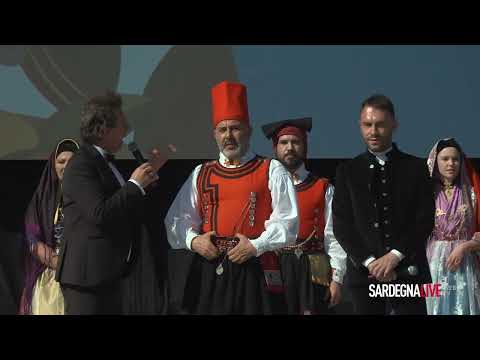
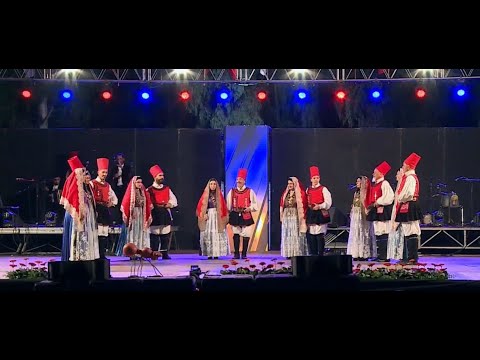
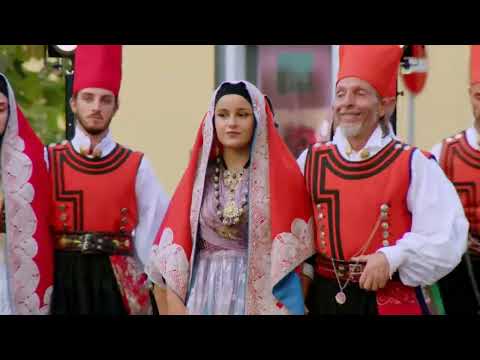
Cagliari, known in Campidanese as Casteddu — a word that literally means “castle” —, is the capital of Sardinia, overlooking the southern coast with a view of the Gulf of Angels. The name derives from the Latin Caralis or its plural Carales used by the Romans, itself borrowed from the Phoenicians who called it Krly. A millenary city and commercial crossroads of the western Mediterranean, this layered history is reflected in the extraordinary variety of its traditional dress, which changes according to social class, occasion and the gender of the wearer. This dress is displayed in its most magnificent form during the Procession of Sant’Efisio on 1 May.

© Gianni Careddu, CC BY-SA 4.0 (modified)
Women’s dress
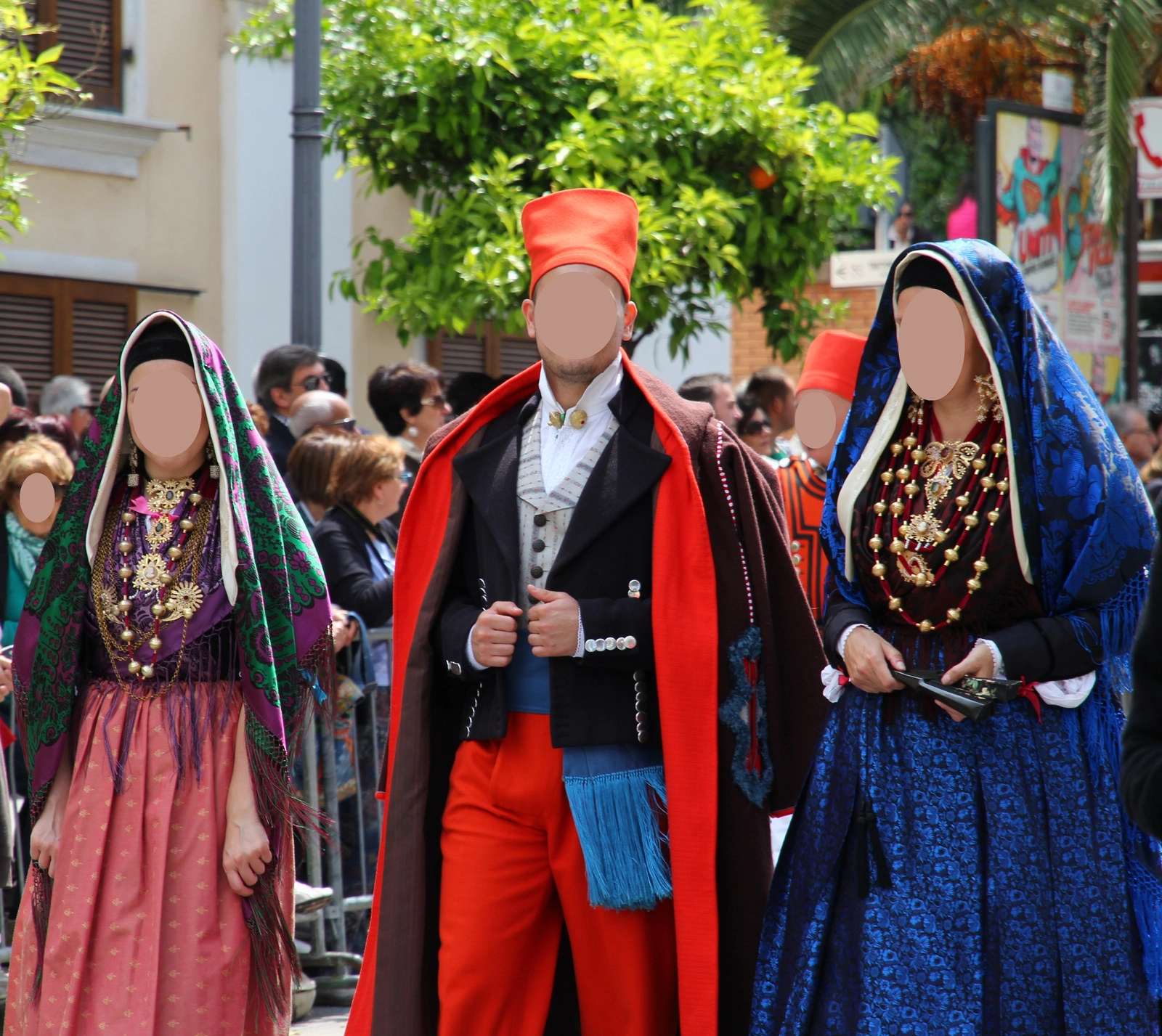
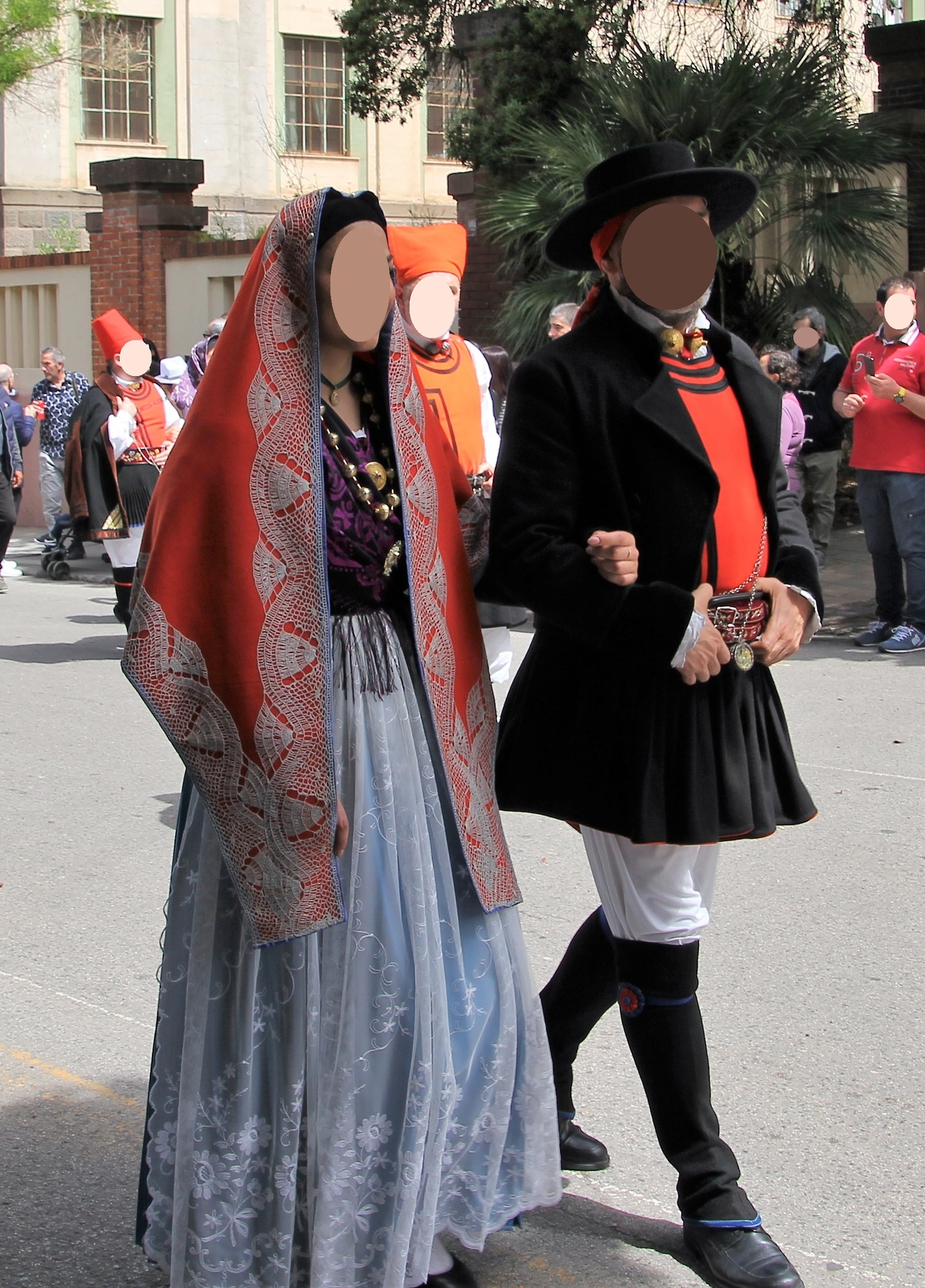
The bistiri de panettera, the formal and bridal dress of the bakers’ wives, is the most sumptuous variant. On the head is worn su cambusciu, a black cap in shiny cotton thread knitted in pibionis stitch, of clear Spanish influence. Over it is draped sa mantiglia arranda ‘e pratta, a wide red cloth mantle trimmed with silver-thread lace of Majorcan style, with a rounded tip, knee-length front panels and an inner border of blue silk.
The bodice consists of sa camisa, a plain cotton shirt with three-quarter sleeves, and su gipponi, a black satin jacket with a square neckline and velvet-trimmed sleeves, laced at the front with a crossed ribbon. Over the shoulders is placed su muccadori ‘a perra, a triangular shawl in patterned beige and fuchsia silk with fringe, crossed over the chest and pinned to the skirt, where jewellery is fastened; brides wore it in white embroidered tulle. The skirt consists of sa fordetta de asutta, a white embroidered cotton petticoat with sangallo lace, and su guardapè, the blue silk-satin skirt fully pleated except for the front panel, covered by su deventali, the hand-embroidered tulle apron. On the feet, white cotton stockings and black shoes covered in blue silk satin.
Jewellery: sas arreccadas a mura, gold and baroque-pearl earrings in three parts (a rose, a bow pendant sa palia and a mulberry); sa broscia, a gold brooch worn on a velvet ribbon; s’arrosariu, a silver and garnet rosary with a bow and a reliquary patena.
© Gianni Careddu, CC BY-SA 4.0 (modified)
The bistiri de andiana, the everyday dress, is more restrained. Two kerchiefs are layered on the head: su muccadori ‘e conca, a bronze-coloured silk kerchief folded into a triangle, and su muccadori mannu (also muccadori tanau), a printed cotton kerchief in brick-red with fringe. The bodice includes a long-sleeved white cotton shirt, a black gipponi in rasatello and a purple and green printed silk shoulder shawl. The skirt, andiana indorada, is in cotton printed with golden floral motifs, paired with a black printed cotton apron.
© Gianni Careddu, CC BY-SA 4.0 (modified)
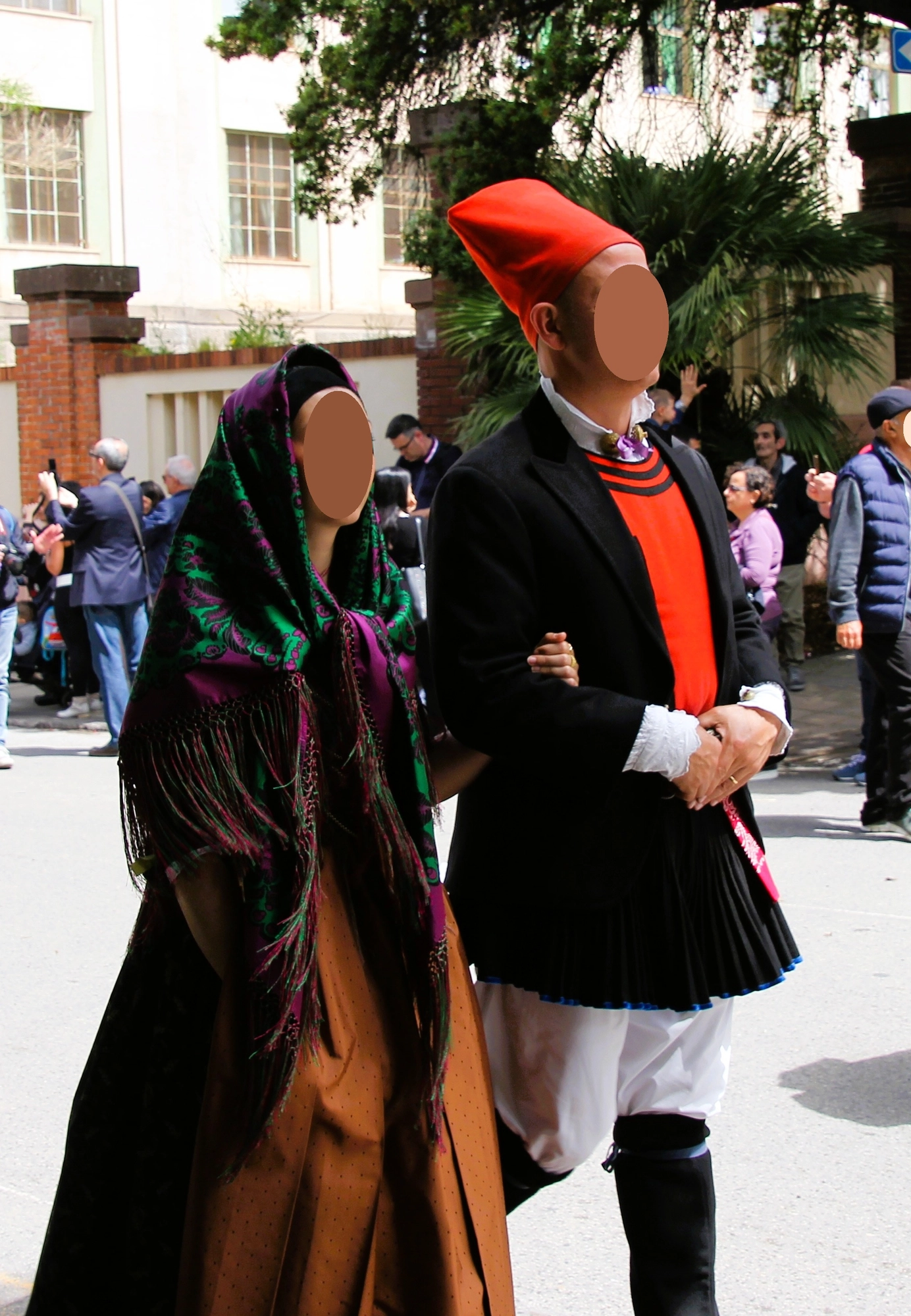
The bistiri ‘e seda, the semi-formal festive dress, is worn on important occasions instead of the mantle dress, replacing the mantilla with a green and violet patterned silk shawl tied under the chin. The bodice mirrors the formal dress: black cotton-thread cap, long-sleeved white cotton shirt, black gipponi with three silver buttons on the sleeve, green and yellow patterned silk shoulder shawl. The skirt is in violet patterned silk and the apron in green patterned silk.
The jewellery for this variant includes sa cannacca ‘e bentu, a gold necklace with hollow beads — called “wind” necklace because the beads are empty —, together with the same earrings and brooch as the formal dress.
© Gianni Careddu, CC BY-SA 4.0 (modified)
Men’s dress
Cagliari’s vocation for trade and fishing is reflected in its three male traditional dress variants, each linked to a historic profession of the city.
The bistiri ‘e piscadori, the fisherman’s festive dress, is the most elaborate. On the head is worn sa berritta a piberoni, a red cloth cap of tubular form about one metre long, worn in a characteristic cylindrical shape. The white cotton shirt has embroidered collar and cuffs closed with gold filigree buttons. Over it is worn su corpettu, a grey striped patterned silk waistcoat, and sa gianchetta, a double-breasted blue cloth jacket with five metal buttons on the cuffs. The trousers sas cartzonis are in red cloth; at the waist, sa lazzada, a blue satin sash with silk fringe.
The bistiri de ortolanu (market gardener) includes: a red printed cotton kerchief tied at the nape, a wide-brimmed black hat (su sombreri), a white shirt, a red cloth waistcoat trimmed with black silk, a black cloth jacket, white cotton trousers, a black cloth skirt-garment, black gaiters and a leather belt covered in bordeaux velvet with polychrome floral embroidery.
The bistiri de su carradori, worn by the cartman who still today draws Sant’Efisio’s cart in the 1 May procession, comprises: a red cloth cap, white shirt, red waistcoat trimmed with black silk, white trousers (mudandas), a black cloth skirt-garment (arrodinu or cratzonis de arroda), black gaiters (cratzas) and the same bordeaux velvet leather belt with floral embroidery.
Main fabrics
Silk, Satin, Cloth
Occasion
Sant’Efisio Procession (1 May)
Events
-
1 May
Sant’Efisio Procession Discover