Historical background and roots of tradition
Cossoine, known in Logudorese as Cossoìne, is a village in the Meilogu, in the province of Sassari. The origin of the name is uncertain: it may derive from the Latin Corsus (Corsican), appearing in medieval documents as CursenI, Corsein and Cossedin; others link it to the Logudorese word cossu, a wooden tub used for washing laundry. The village was part of the ancient curatoria di Caputabbas, a medieval district of the Giudicato di Torres in north-western Sardinia. The festive dress of Cossoine expresses the refinement of the Meilogu through hand embroidery, precious fabrics and a clear distinction between the women’s and men’s variants.
Women’s dress
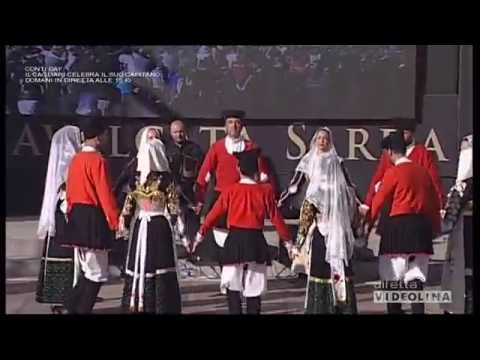
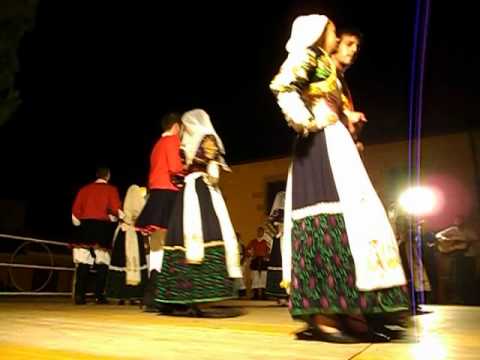
The women’s dress of Cossoine, in its bridal variant known as bestire de isposa, is one of the most accomplished expressions of Meilogu clothing. On the head is worn the velu, a white lace veil that frames the face. The shirt, camijia, is in white linen with hand embroidery on the front. The bodice, imbustu, is in black velvet with floral embroidery in golden thread covering the shoulders and chest. At the waist is tied the corittu, a pink silk sash that visually separates the bodice from the skirt. The skirt, munnedda, is in black cloth with a floral velvet flounce at the hem, pleated at the back and smooth at the front. Completing the ensemble, the apron sa falditta, in hand-embroidered golden silk with large floral motifs, is the most striking chromatic element of the dress.
Men’s dress
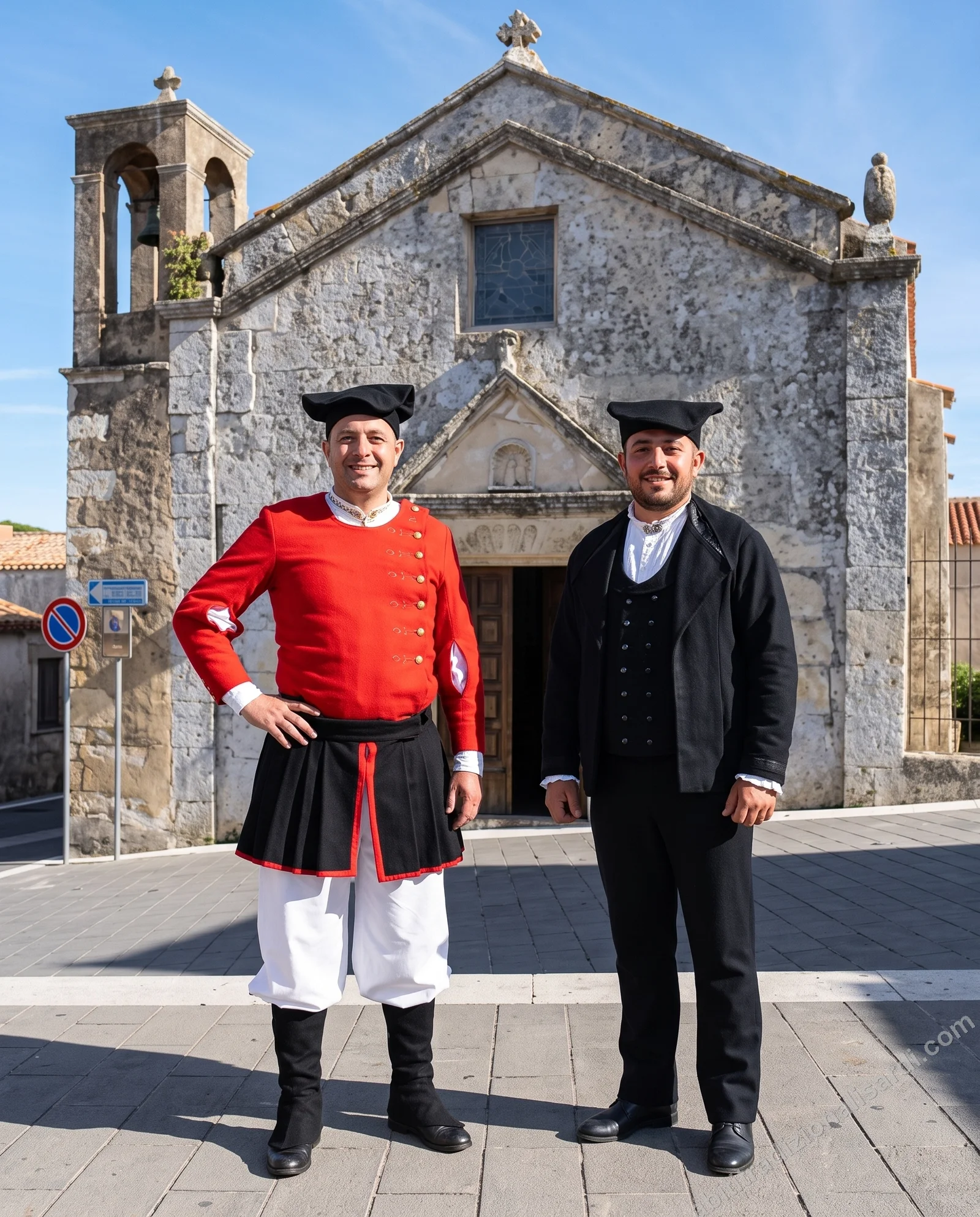
The men’s dress of Cossoine comes in two distinct variants, both worn with the berritta, the flat black cloth cap typical of the Meilogu. The more formal version includes the entone, a cloth jacket, the colpette, the gabbanu, a cloth cloak, and the zamarra, a long coat that gives the ensemble an austere appearance. The trousers, caltzones, are in dark cloth; on the feet are worn the bottas, black leather boots. The festive variant is more vivid: a white shirt is covered by a red corpetto with gold buttons; white calzoni are visible beneath a black pleated gonnellino with a red border; black gaiters are fastened at the calves. Both versions express the sobriety characteristic of men’s dress in the Meilogu, with the festive variant introducing red as its sole prominent chromatic note.
Main fabrics
Velvet, Brocade, Silk, Cloth
Occasion
Bridal dress, Festive dress
Events in Cossoine
-
2–4 October
San Francesco View →