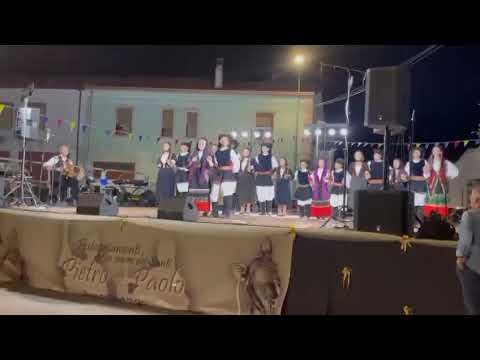
Historical background and roots of tradition
Lula, known in Sardinian as Lùvula or Lùgula, is a village of the Baronia, in the province of Nuoro, located in the heart of north-eastern Sardinia. Its territory is rich in nuragic remains — the nuraghe Ruju being the most notable — and the village has kept alive over the centuries the pastoral and craft traditions that have shaped its cultural identity and elaborate traditional costume.
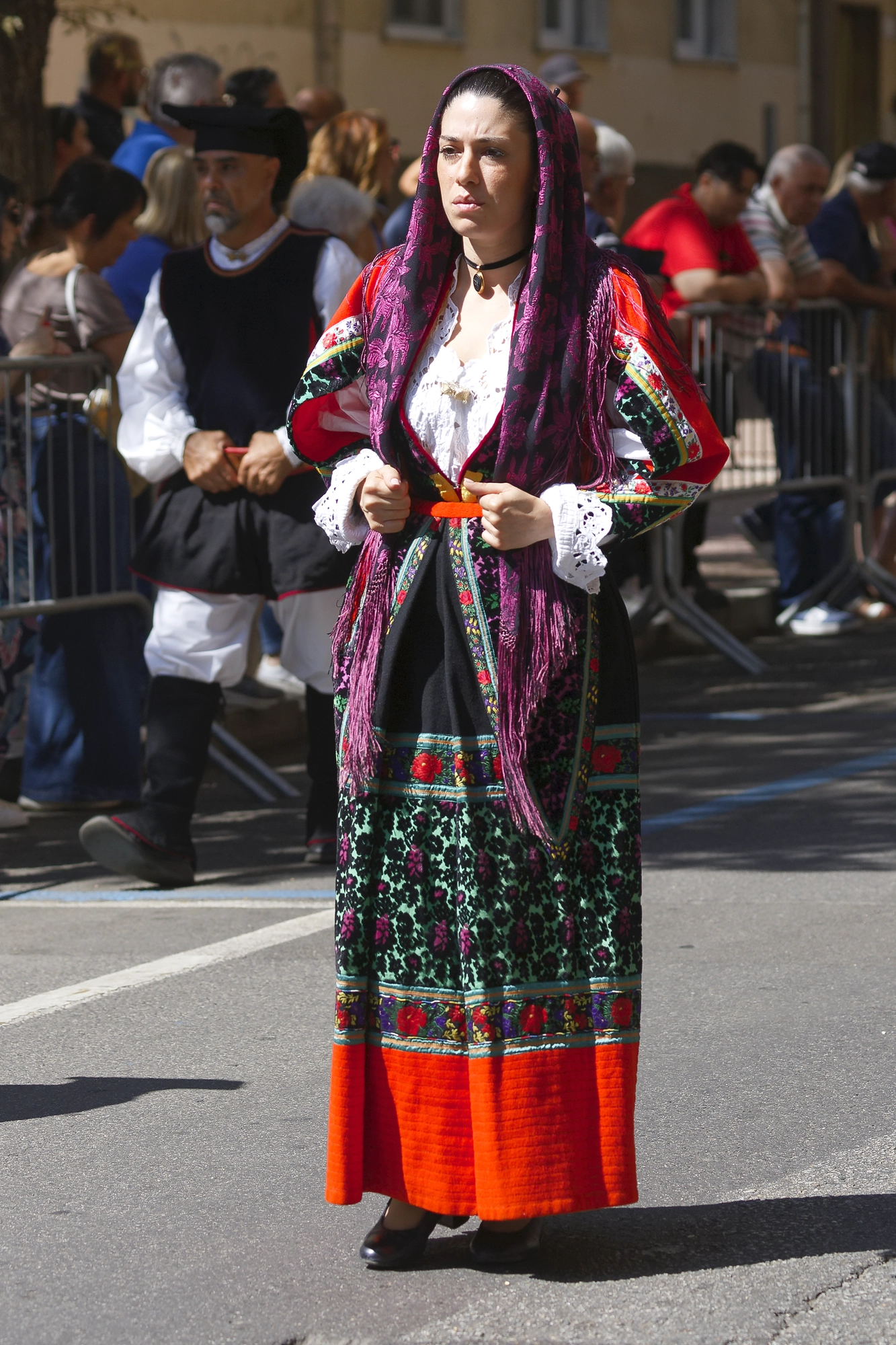
Women’s dress
The traditional women’s costume of Lula comes in two variants. In the su coritu variant, the headdress is su mucatore de tibet folded into a triangle with the point downward, or su mucatore de seta embroidered with frunzas (small flowers) with the point upward; for ceremonies tied to the life cycle — weddings and baptisms — sa vela, a richly embroidered headdress, is worn instead. Sa camisa in white cloth bears su coro embroideries at the cuffs and collar and puffed sleeves crambiche. The bodice su casseddu, padded and covered in blue velvet, is adorned with silk and gold embroideries in puntu ritzu and edged with sas aveddas, with a grana decoration on a double-face ground. Su coritu, the jacket that gives the variant its name, is in grana ruja wool cloth with a double-face front trim adorned with sas vetas and aveddas; the collar and sleeves bear sas aveddas and puntu ritzu. Sa ‘unnedda de ‘uresi, the wool cloth skirt, is enriched with sas intentas at the front and the characteristic side trimmings sas màsculas embroidered with sas vetas. S’arda, the apron in patterned silk with lace and galloons, and s’asca, the embroidered silk belt, complete the ensemble.
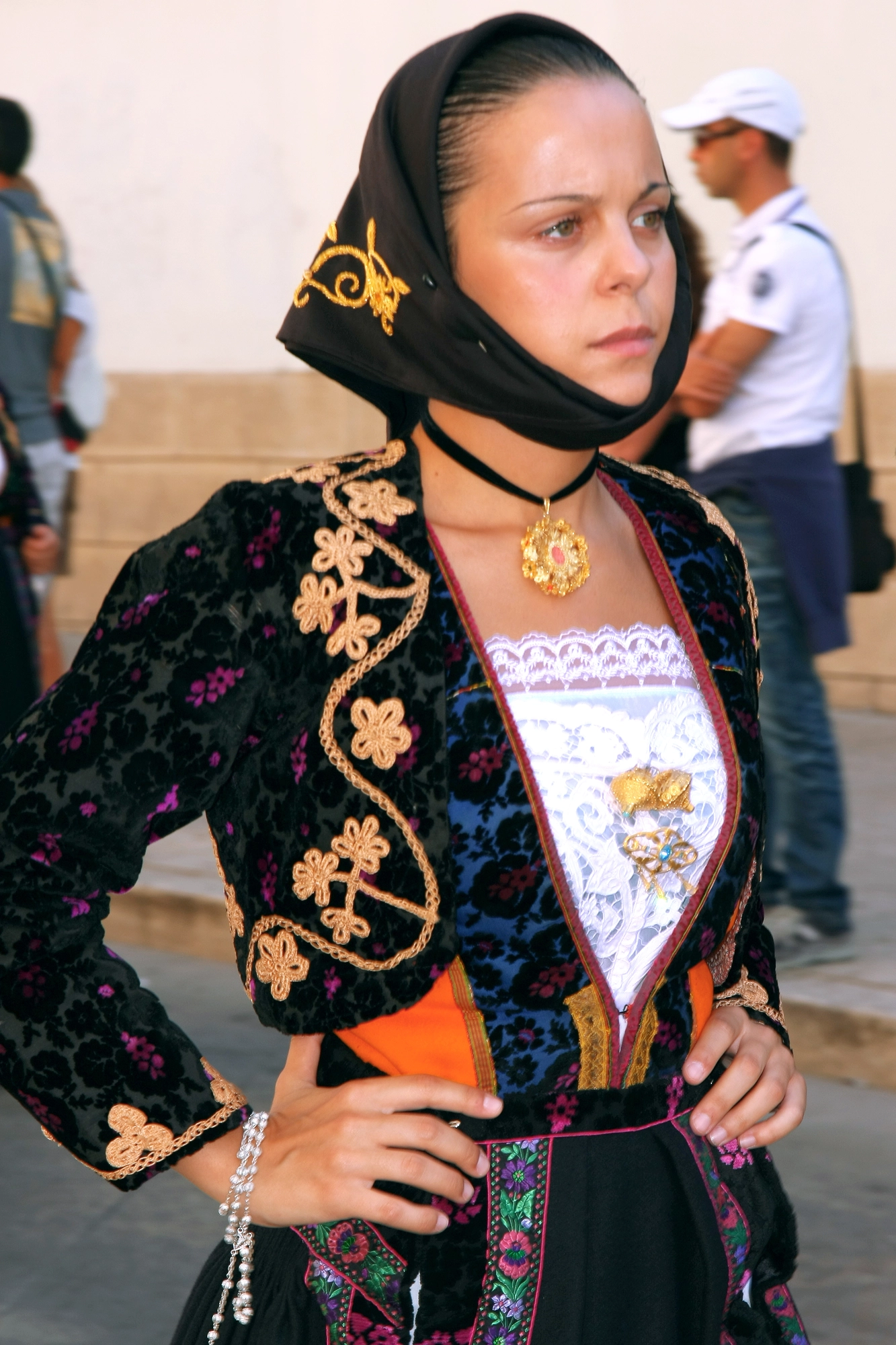
In the su zipone variant, sas petorreddas (embroidered bands applied to the chest) and sas intentas at the collar with needle-mesh su coro replace the bodice su casseddu. Su zipone, the jacket in velvet adorned with sas vetas, becomes su ziponete in plain fabric without decoration for widows. The skirt sa ‘unnedda de pannu or terziopelo features the same sas màsculas in cloth instead of ‘uresi.
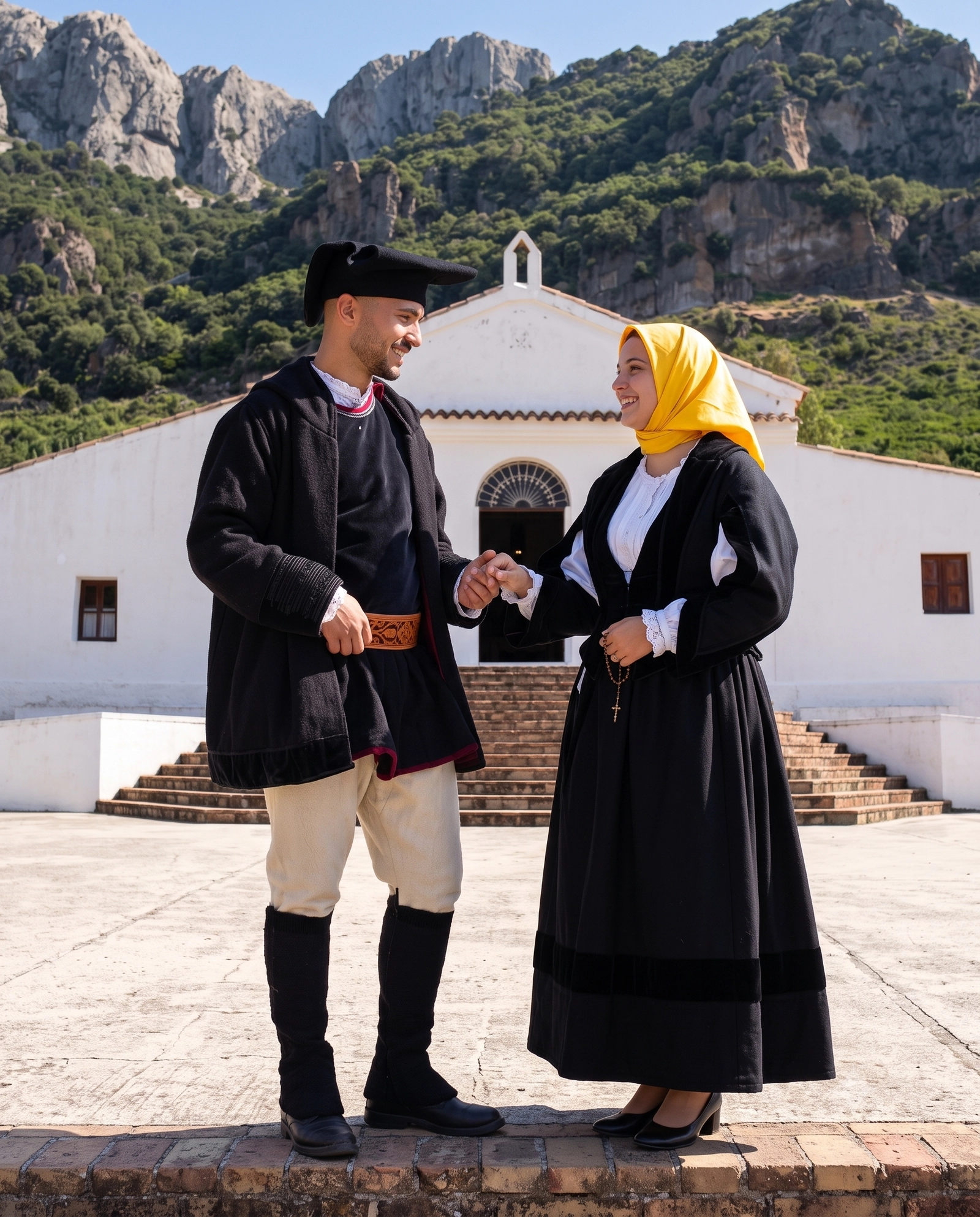
The mourning dress, costumene de gatìa, worn for a close bereavement such as the death of a child, is composed of the same elements as the bridal dress, except for the headdress: a yellow cotton headband, sa vela groga, while the sleeves of the jacket feature an opening through which the shirt protrudes. The headband was worn black for the death of a close relative such as a brother or husband. The dress, except for the yellow headdress and the white shirt, is entirely black.
Men’s dress
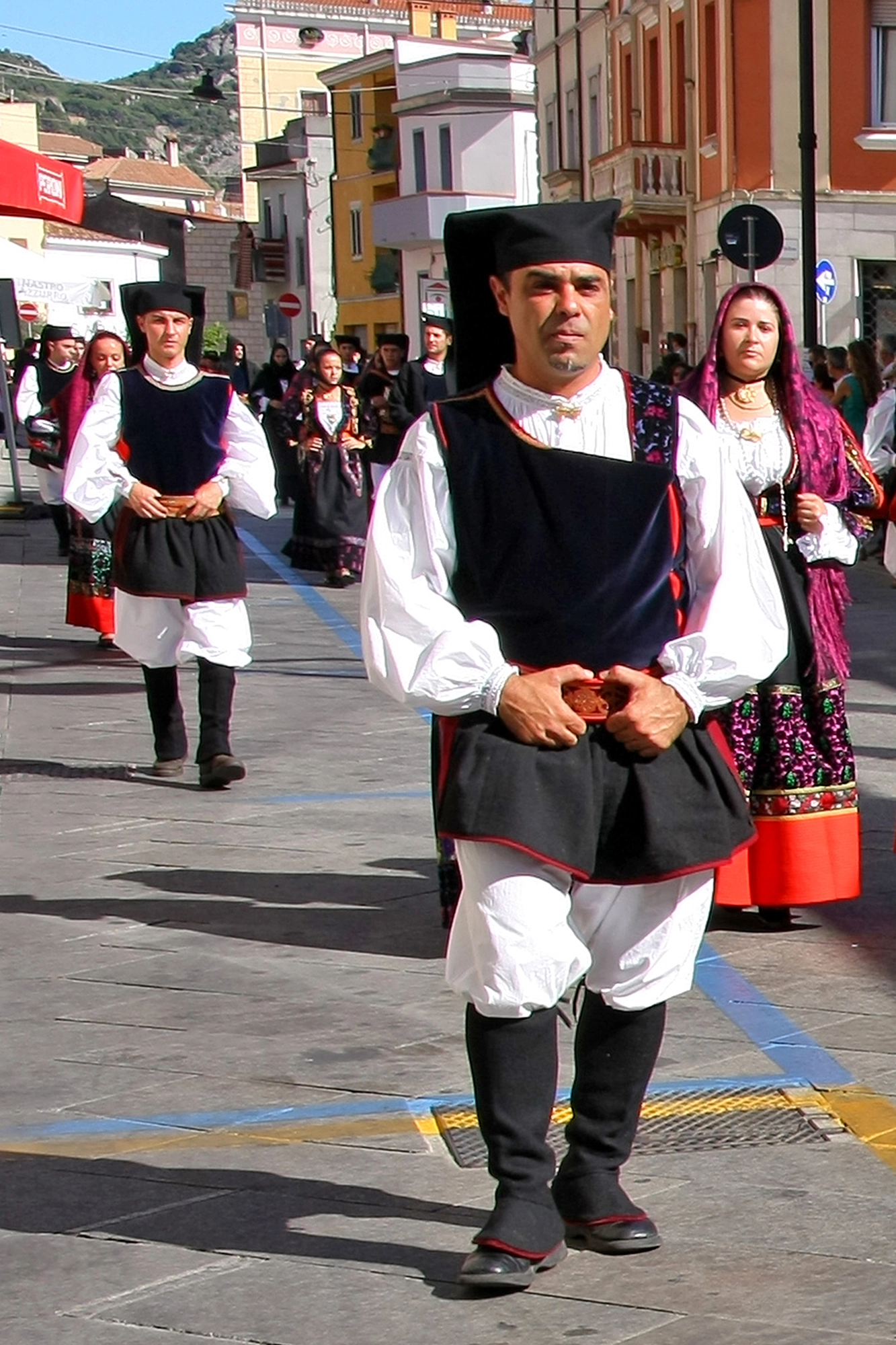
Sa berrita, the cylindrical black cloth cap, crowns the men’s dress of Lula. Sa camisa in white cloth bears sas intentas embroideries and scallop-stitch su coro at the cuffs and collar, with decorative sas bagas and sos butones. Su solopatu, the waistcoat in blue velvet and red cloth, is adorned with the ear-of-wheat motif in puntu ritzu. The cartzones de ‘uresi or cartzones de tela, trousers in orbace or linen, carry sas intentas stitched along the sides; sas cartzas in black orbace are trimmed with velvet. Sas fracas, the bell-shaped orbace skirt-like garment with side pockets, is edged with dark red cloth. Sa chintòglia is the leather belt. Su gapoto, the orbace jacket, bears on the back su cucutzu, the pointed hood in black velvet.