Historical background and roots of tradition
Orani, known in Sardinian as Oràne, is a village in the Barbagia di Ollolai, in the province of Nuoro. The name likely derives from the Latin predial or family name Oranius, linked to a Roman-era landholding or personal name. Situated between the Supramonte massif and the hills of the Barbagia, the village preserves one of the most elegant and thoroughly documented traditional costumes of the Sardinian interior, characterised by the quality of its fabrics and the precise layering of its garments.

Women’s dress
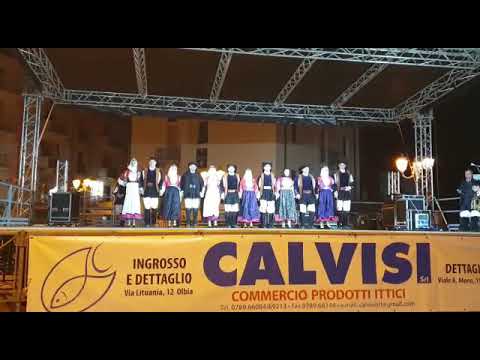
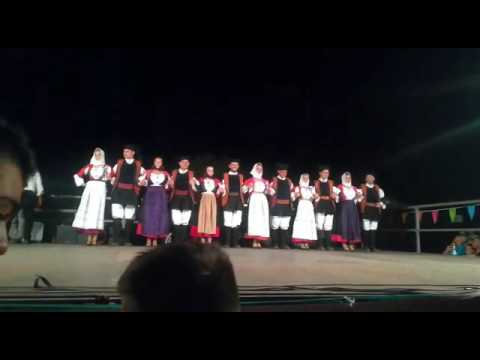
The bridal dress of Orani is called Bestire de isposa. The headdress is the tivazzola (headband), a rectangular white cotton cloth approximately 120 cm long and 30 cm wide; it frames the face, passing several times under the chin, with one end secured to the right side of the head with a gold pin. The camisa (shirt) is of white cotton, pleated across the chest with cut-work embroidery on the neckline and cuffs; the fullness of the fabric is reduced by an embroidered geometric tuck, s’archizzone, and two gold filigree buttons close the neckline. The corittu (short jacket) is of red cloth, small in size, edged with red satin ribbon and enriched with multi-coloured stitching; the sleeves have two openings — one at the armhole and one from elbow to wrist — through which the shirt emerges, with large buttonholes at the cuff once fastened with buttons. The carramagnu (skirt) is black, with a hemp or linen warp and a wool weft, joined to the bodice with a purple silk band at the waist; the skirt has a double pleat at the waist except for the smooth front panel, and a red satin hem. The bodice, sas palas, is of brown cloth edged with red silk ribbon, covers the back completely and fastens at the waist with hooks; on the front, a blue satin bow is pinned — worn on the wedding day — together with s’ispuligadentes (the toothpick). The pannantis or franda (apron) is of white cotton, embroidered, with numerous ruffles in the same fabric.
Men’s dress
The men’s festive dress, documented in the first decades of the twentieth century, is composed of numerous layered garments. The berritta (cap) is of black cloth, tubular in shape, approximately 60 cm long, worn falling back over the head. The ghentone (shirt) is of white cotton with embroidered and pleated collar and cuffs, fastened with silver sheet and filigree buttons. The vrassette (short jacket) is of red cloth, lined with blue velvet and edged with burgundy velvet, with side-button fastening; the sleeves have two openings — one internal from armhole to elbow and one external from elbow to wrist — through which the shirt emerges; at the cuff, ten embroidered buttonholes are closed by a single button. The peddes (waistcoat) is of brown leather. The cartzones (trousers) are of white striped cotton, mid-calf length, worn outside the gaiters. The cartzones de vresi (short skirt) is of black orbace, pleated, with two side pockets, mid-thigh length; a narrow strip of fabric connects the front and back, passing under the trouser crotch. The cartzas (gaiters) of black orbace cover the calf with rounded ends that partially hide the shoes, fastened below the knee with a lace. The chintorgia (belt) is of black leather.