Historical background and roots of tradition
Paulilatino, known in Sardinian as Paùlle (in the local pronunciation Paùli Làttinu), is a village in the Guilcier region, in the province of Oristano. The name derives from the Sardinian word paùle (marsh, from Latin palus / paludis) combined with the adjective làttinu: literally “milky marsh” or “whitish marsh”, referring to an ancient wetland near the village — drained in the nineteenth century — that in spring was covered by a pale, milky film, once also associated with the Latin name Paulis Lactea. The territory is known for the nuragic sacred well of Santa Cristina, one of the best-preserved nuragic sacred sites in Sardinia.

Women’s dress
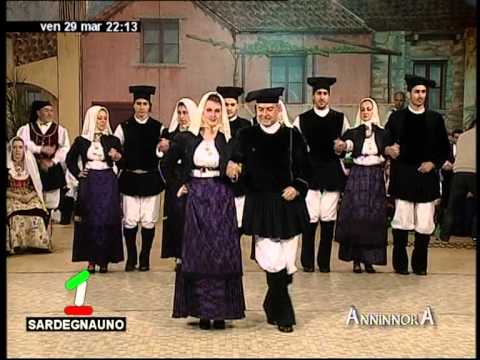
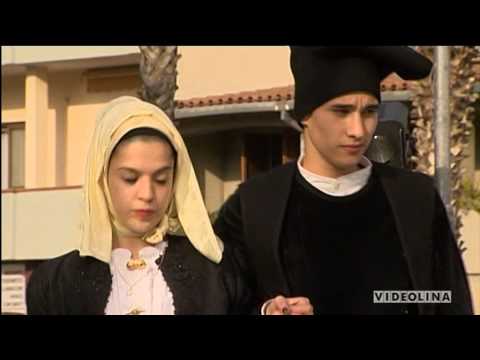
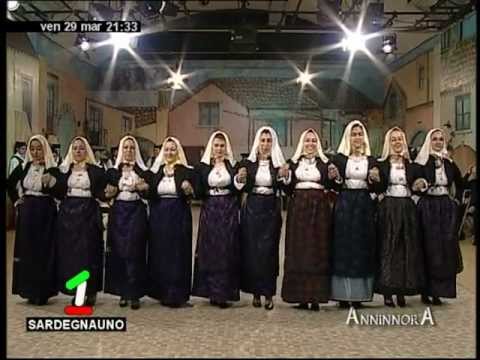
The festive women’s dress of Paulilatino features a fazzoletto headscarf in beige figured silk. The purple floral scialle shawl in figured silk is draped over the shoulders. The shirt is white cotton. The corpetto bodice is in polychrome floral brocade on a yellow ground. The giacchino short jacket is in black figured silk, edged with brown lace. The skirt is in black wool with a purple silk flounce; the costume is completed by the grembiule apron in purple figured silk.

Men’s dress
The berritta cap is black in wool, tubular in shape with rounded edges, approximately sixty centimetres long; it is worn left to fall over one shoulder. The camisa shirt is white cotton, of extremely simple cut. The zippone bodice is in black velvet, edged with green cotton ribbon, double-breasted and enriched with hand-embroidered floral motifs. The cappotteddu jacket is in black orbace wool, hooded and waist-length; the sleeves and pocket trimmings are in black velvet. The cartzones trousers are white cotton, calf-length, and are worn tucked into the gaiters. The ragas wraparound kilt is black in wool, pleated and edged with black velvet, reaching mid-thigh; a narrow strip of fabric joins the front and back panels, passing under the crotch of the trousers. Sas mesas cartzas, the gaiters, are black in wool, edged with velvet at the lower edge; they cover the calf, end in a rounded shape concealing part of the shoes, and are secured with an elastic under the knee.
Main fabrics
Figured silk, Brocade, Velvet, Orbace, Wool, Cotton
Occasion
Religious feasts, folk parades
Events in Paulilatino
-
4–6 September
San Costantino Imperatore Go →