The Traditional Dress of Gavoi
Gavoi, known in Sardinian as Gaboi, is a village in the Barbagia di Ollolai, in the province of Nuoro. Situated at over eight hundred metres above sea level among holm oak forests and the panoramas of the artificial Lake Gusana, it is celebrated throughout Italy for the international literary festival L’Isola delle Storie and preserves one of Sardinia’s most elaborate and distinctive tailoring traditions. The name Gaboi recalls two etymological hypotheses: the first links it to the Latin personal name Gabinus (Gavino), the village’s patron saint; the second suggests a pre-Latin origin from the root gava or gaba, meaning a gully, gorge or watercourse.

Women’s dress
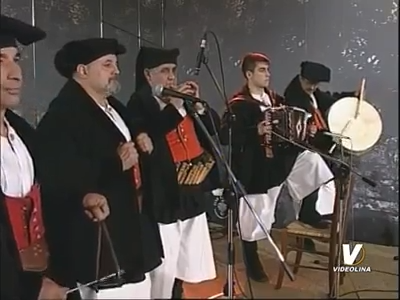
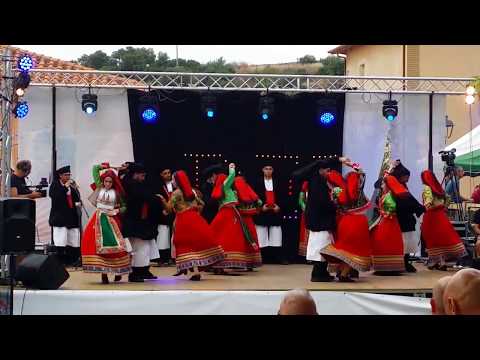
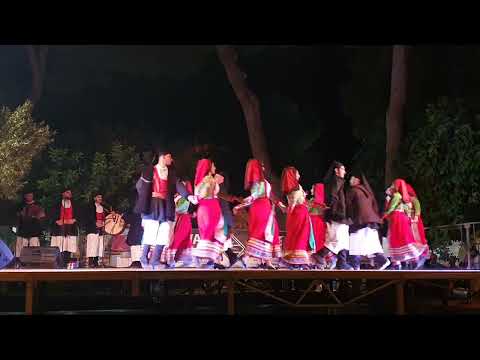
The Bestire ‘e sa festa (festive dress) is recognised for its extraordinary richness. Women wear su camussu, the cap in green broadcloth and brocade decorated with woven ribbon, coloured ribbons and silver lace, over which rests su cappuzzu, the small red broadcloth mantilla covering the head, edged with black satin ribbon and black lace. Sa ‘amisa (the shirt) is of the finest white linen, entirely embroidered and fastened with gold filigree buttons. Sas palas (the bodice) are covered in woven ribbon, gold and silver lace, with characteristic stiff pointed sinos at the front. Su fardellinu (the skirt) is of entirely pleated red broadcloth, with a border alternating woven ribbon, coloured ribbons, silver lace and gold braid. Su imboddiu (the apron) is of green broadcloth with a red lace border, ribbons and silver lace. The ensemble is completed by su zippone (the jacket) in green floral brocade, edged with red satin ribbon and silver lace.
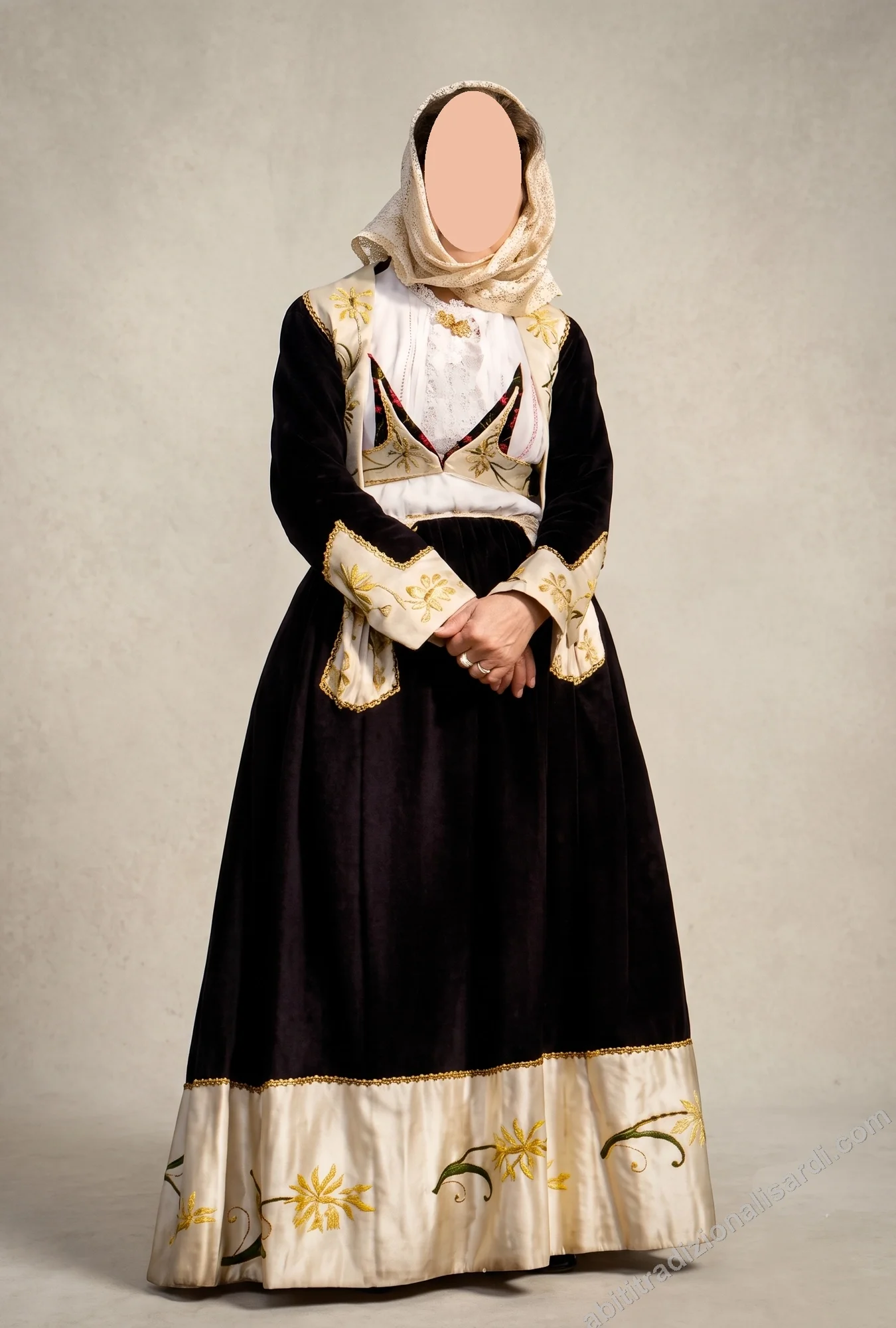
The Bestire de s’isposa (bridal dress) is distinguished by more collected and solemn tones. Su muccadore, the bridal coif, is of pearl-grey silk, pleated and bordered with white lace. Sa ‘amisa (the shirt) is of white cotton, pleated at the front. Sas palas (the bodice) are of beige silk satin with sos sinos (rigid triangular points) in burgundy. Su zippone (the jacket) is of brown wool, edged with beige silk satin and hand-painted with polychrome floral motifs. Sa veste (the skirt) is of entirely pleated brown broadcloth with a wide beige silk satin border painted by hand.
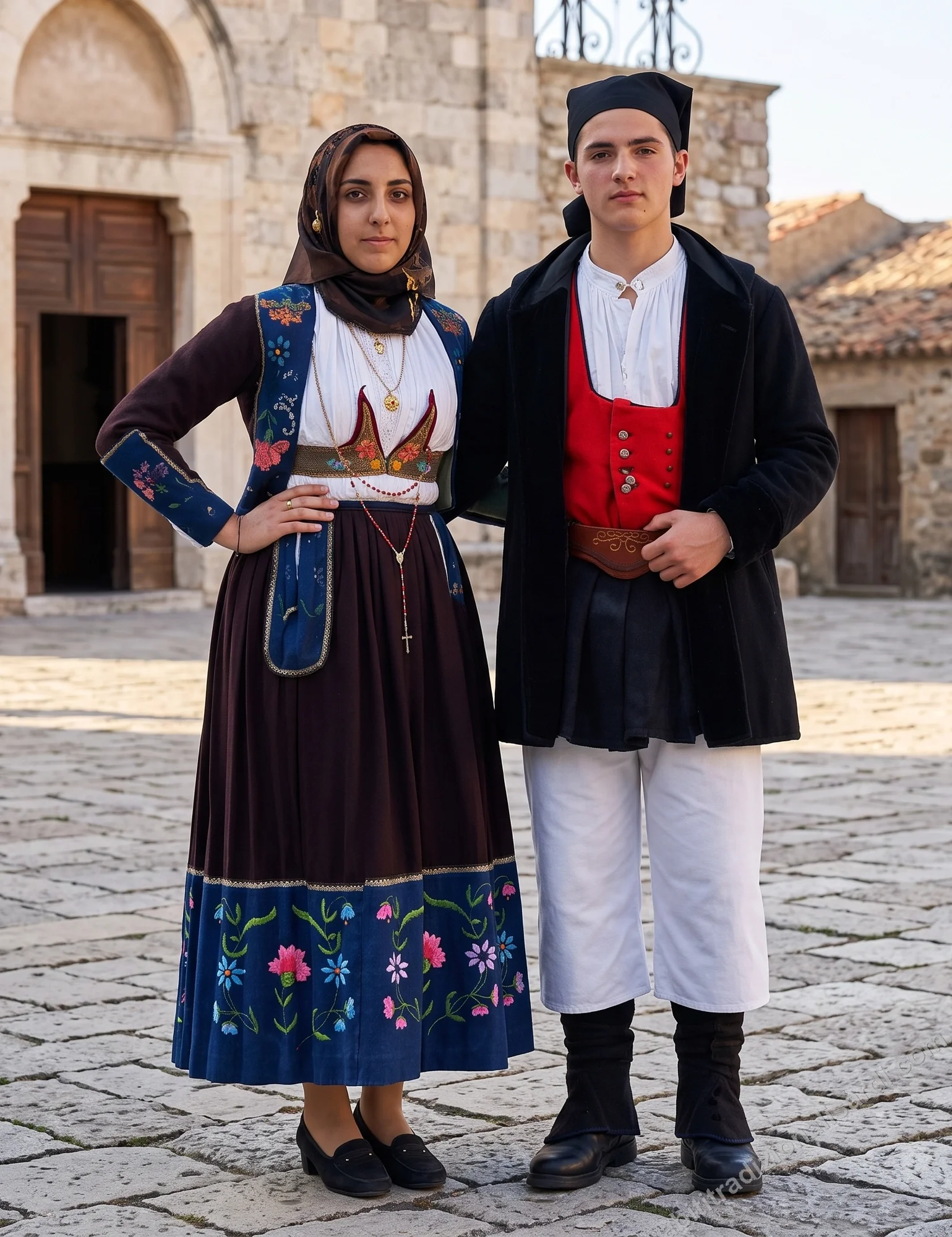
The everyday women’s dress, su bestire de itianu, consists of a brown tibet headscarf, white cotton shirt, blue velvet bodice painted by hand, brown broadcloth jacket edged with blue velvet, and a brown broadcloth skirt with a wide blue velvet border.
Jewellery & Accessories
The jewellery of the women’s costume in Gavoi includes su sebeze (the silver or gold filigree pectoral), the rughitta (a small pendant cross) and the ispuligadentes (a silver toothpick worn as a pendant).
Men’s dress
The men’s costume features sa berritta, the tubular black orbace cap worn draped down the back of the head. Sa ‘amisa (the shirt) is of white cotton, pleated at the front. Su cosso (the waistcoat) is of red broadcloth, fastened at the centre with silver buttons. Su cappottinu (the overcoat) is of black broadcloth. Sos ‘artzones biancos (the trousers) are of white canvas, knee-length. Sos ‘artzones nigheddos (the pleated kilt) is of black orbace. Sas ‘artzas (the gaiters) are of black orbace with an upper turn-down cuff and lower velvet border, fastened below the knee. The ensemble is completed by sa brentera, the brown leather belt with a wide front pocket.