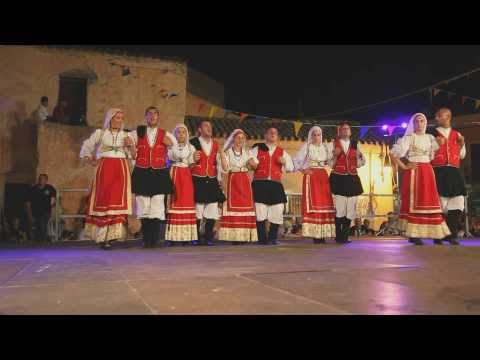
Historical background and roots of tradition
Gesturi, known in Sardinian as Gèsturi, is a village in the Marmilla region, in the province of Sud Sardegna. Located at around 320 metres above sea level in the northern highlands of the Marmilla, the village is dominated by the imposing basalt plateau of the Giara, world-famous for its wild ponies and unique natural ecosystem. Gesturi is also known as the birthplace of Blessed Nicola da Gesturi, a Capuchin friar who lived in the twentieth century, and is a destination for pilgrims as well as history and nature enthusiasts.
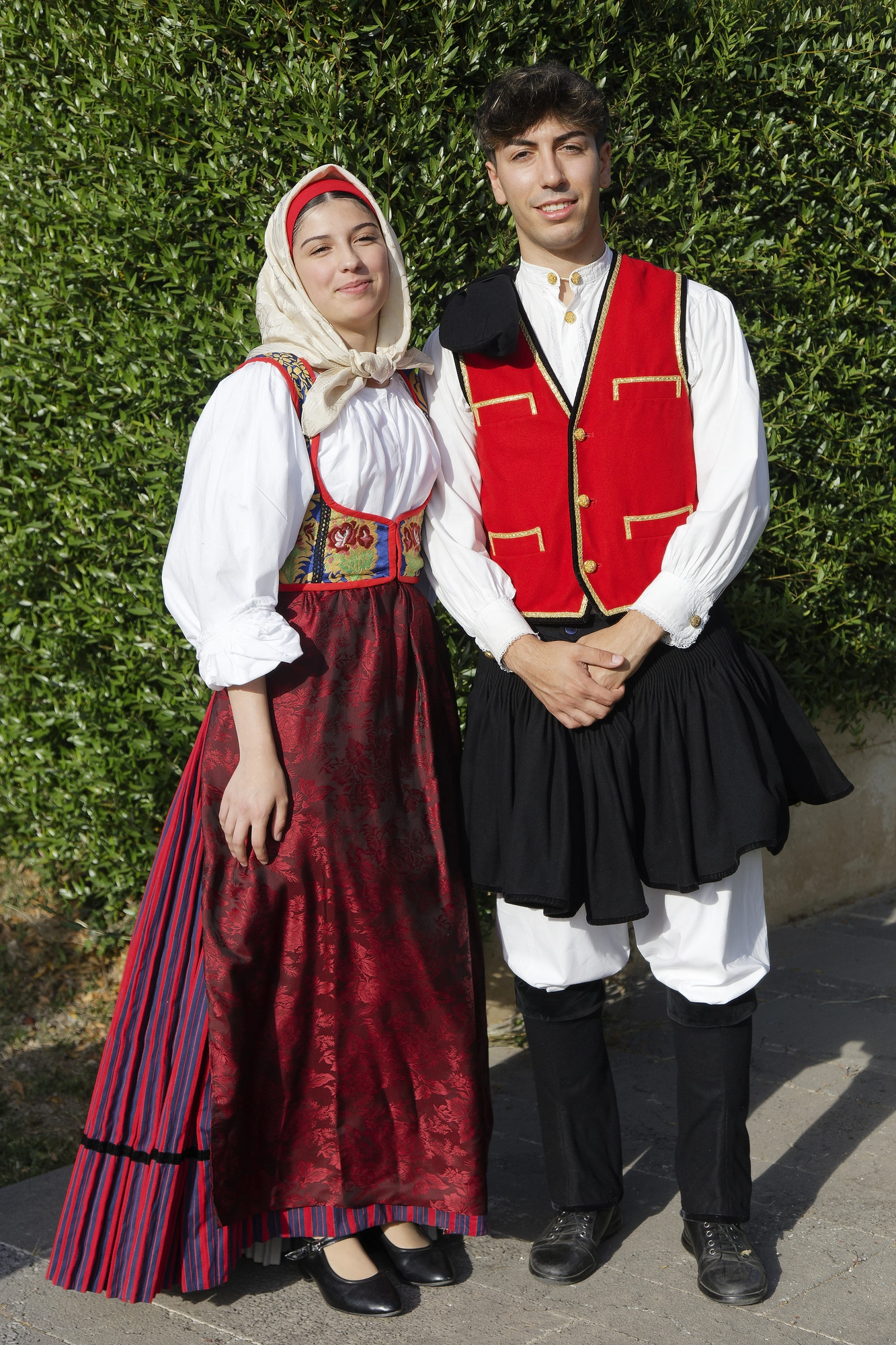
Women’s dress
The women’s costume from Gesturi is distinguished by its vibrant red and white palette. A red cotton cuffia (bonnet) is covered by a white tulle veil that frames the face with elegance. The blouse is white cotton with wide sleeves. The bodice — corpetto — is made of polychrome floral brocatelle, with decorations that reflect the craft tradition of the Marmilla. Both the skirt and apron are red woollen cloth, giving the outfit a solemn, festive appearance typical of the village’s ceremonial occasions.
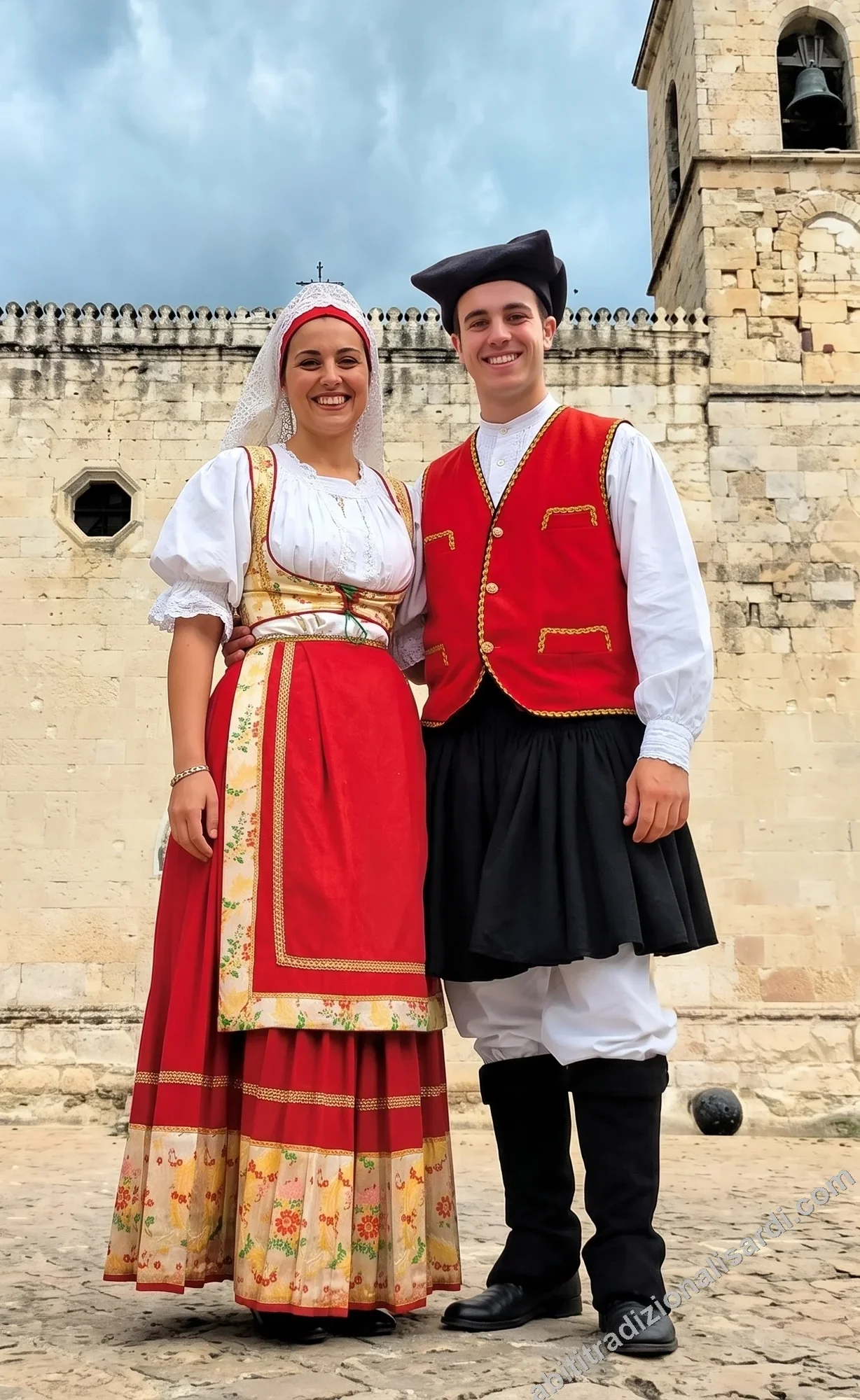
Men’s dress
The men’s costume alternates vivid red with the black of the woollen cloth. A black woollen berretta (beret) covers the head. The white cotton shirt is worn beneath a red corpetto (waistcoat) trimmed with gold braid. The calzoni (trousers) are white cotton. A black woollen gonnellino (pleated skirt) falls to the knee, while black ghette (leggings) complete the outfit with a nod to the agropastoral tradition of the Marmilla.