Historical background and roots of tradition
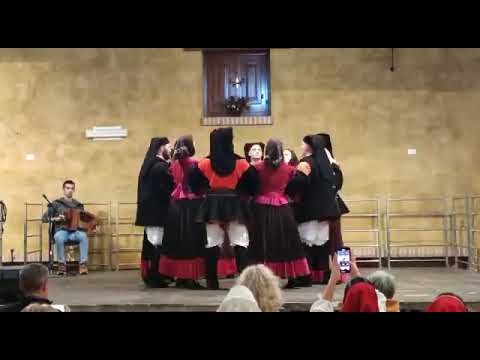
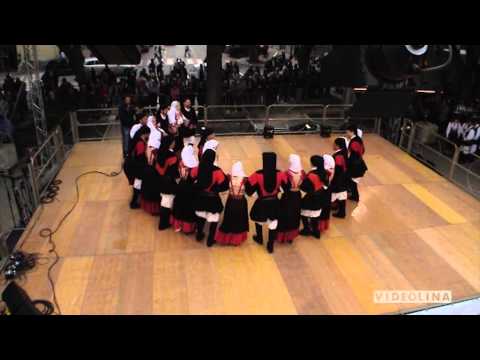
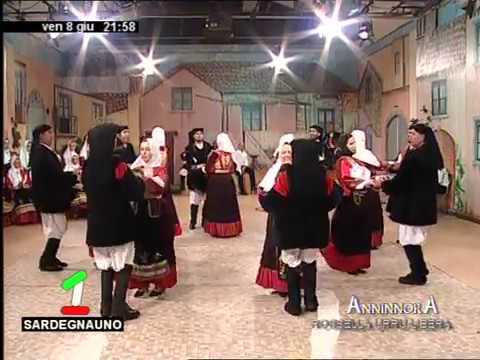
Nuoro, known in Sardinian as Nùgoro, is the chief town of the Barbagia di Nuoro and the capital of the province of the same name. According to linguistic studies, the ancient name Nugoro derives from an Indo-European or paleo-Sardinian root meaning “at the foot of”, a reference to the town’s position right below Monte Ortobene. Birthplace of Grazia Deledda, who received the Nobel Prize for Literature in 1926, Nuoro is home to one of the island’s most important museums of folk tradition and traditional dress, and hosts the Sagra del Redentore, which every August draws hundreds of groups in traditional dress from all over Sardinia.
Women’s dress
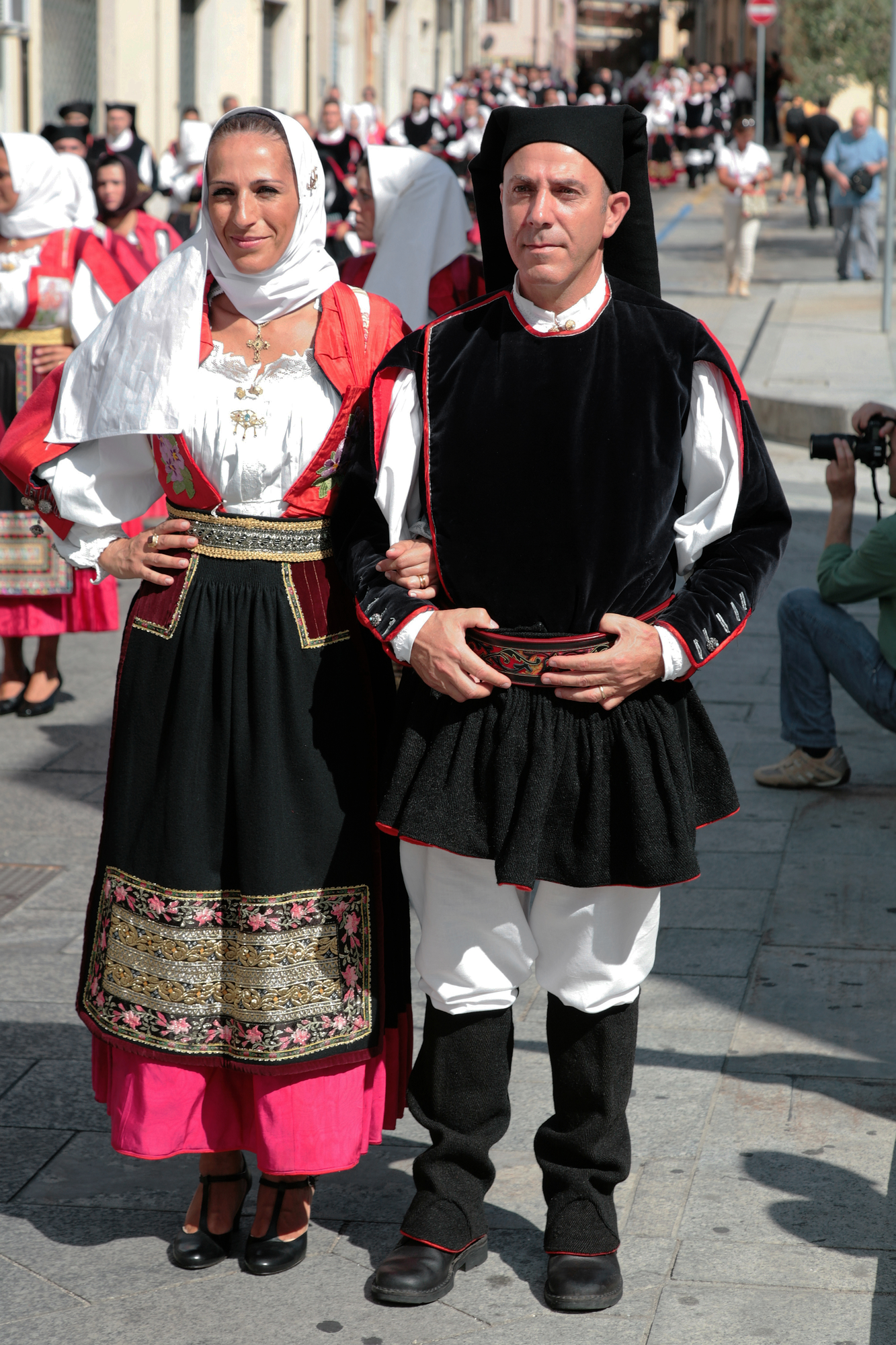
The traditional women’s dress of Nuoro is the bestire de isposa, the bridal dress worn on the most solemn occasions. On the head is placed the benda: a rectangular strip of white linen, about thirty centimetres wide and one metre long, framing the face by passing under the chin; one end is pinned with a brooch to one side of the head, while the other falls freely over the right shoulder.
Under the shirt is worn a white cotton fascia (binder) that wraps the chest and is tied at the back with two laces, enriched with lace applied at the front. The camisa (shirt) is white cotton with hand-made lace trimmings on the collar, cuffs, and button placket. Densely pleated at the front, its fullness is gathered into embroidered pleating in stylised geometric motifs, s’incoradura; the neckline is fastened with two gold filigree buttons, and various brooches and good-luck charms are pinned to the shirt.
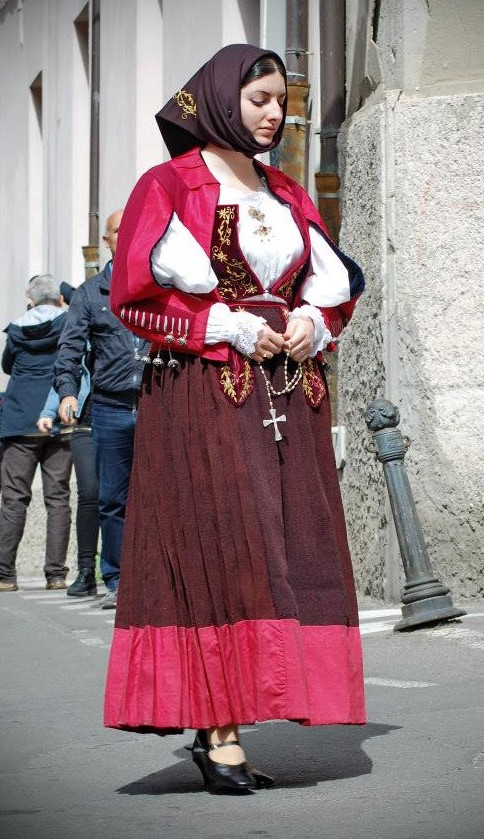
The zippone (short jacket) is red-burgundy velvet, shaped and edged with magenta silk ribbon. The back has a fabric insert gathered into pleats that forms a flared flap. The sleeves have two large openings — one inside from the armhole to the elbow and one outside from the elbow to the wrist — through which the shirt shows. The lining is blue velvet; at the end of each sleeve are large buttonholes from which ten burnished silver filigree buttons hang.
The pala ‘a supra (bodice) is white silk, entirely embroidered with polychrome floral motifs in gold thread, paillettes, and semi-precious stones. Edged with red ribbon and enriched with green-and-gold cotton braid, it carries two red cockades at the back. Made of three sections joined at the back with a fixed lacing, it is lined with blue-and-white checked cotton and fastened at the front with a hook.
The tunica (skirt) is brown orbace, with dense pleating around the waist and hips from which wider pleats fall. It has a broad red silk flounce and, at the front, two longitudinal slits, sas masculas, giving access to an inner pocket; the slits are finished with blue velvet, embroidered in gold thread, and edged with small rosette braid. The franda (apron) is black cloth, entirely edged with purple satin ribbon, densely pleated at the waist, and embroidered in polychrome silk thread with floral and geometric motifs; the upper section has false pockets on a purple velvet band stitched in yellow, while the lower section bears a finely embroidered flounce with predominantly geometric patterns. The chintorja (belt), in gold brocade, encircles the waist and is worn over the jacket and bodice to conceal their fastenings. A distinctive accessory is the spuligadentes (toothpick), in burnished silver filigree.
Men’s dress
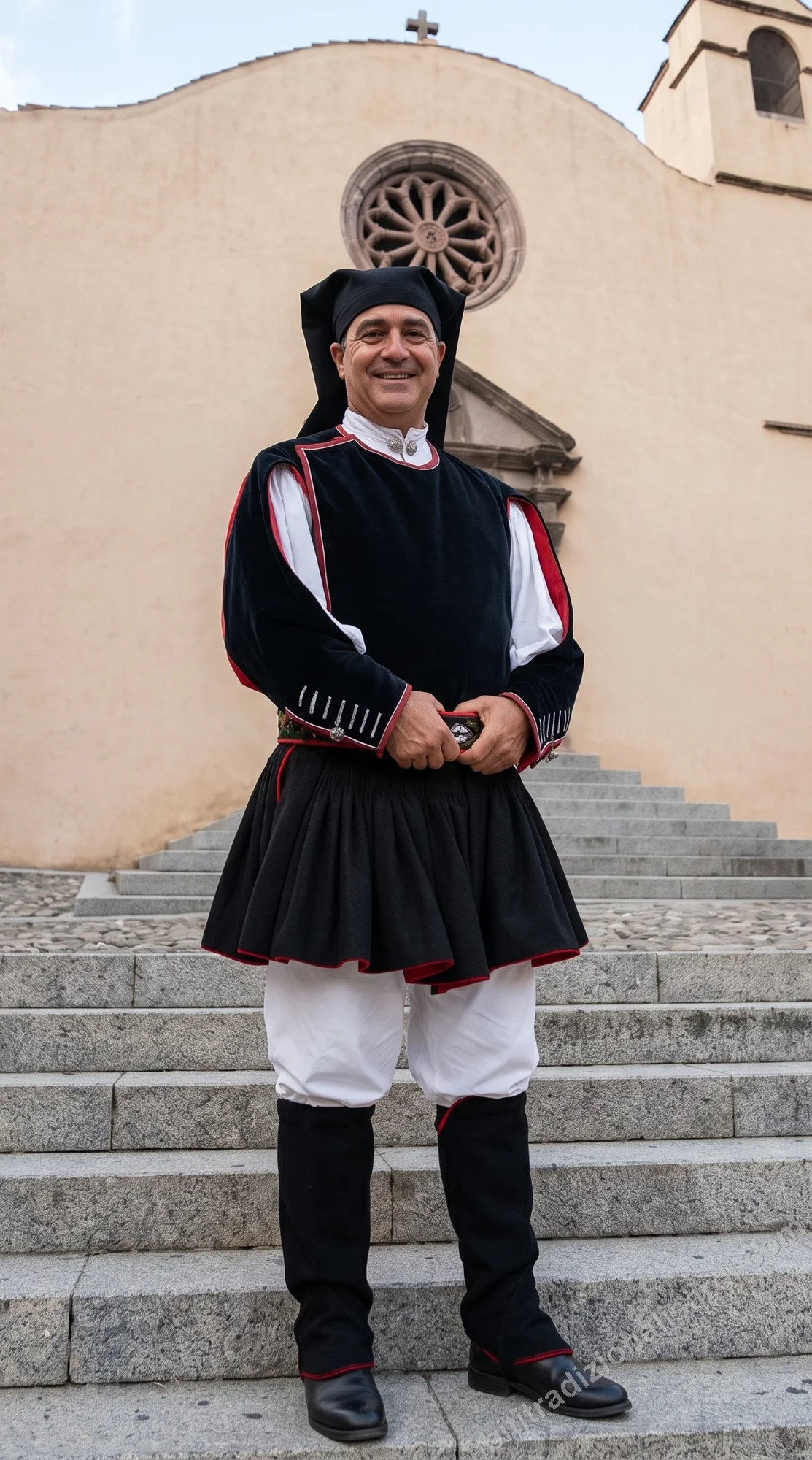
The men’s everyday dress includes the berritta, a tubular black cloth cap with rounded edges, about sixty centimetres long, worn falling behind the head. The ghentone (shirt) is white cotton with embroidered collar and cuffs; the fullness of the fabric is gathered into pleating at the collar and cuffs, and the collar is fastened with gold lamina and filigree buttons.
The zippone (short jacket) is red cloth, lined with blue velvet and edged with red satin ribbon. It has a round neckline, and the sleeves have two openings — from the armhole to the elbow and from the elbow to the wrist — through which the shirt shows; six buttonholes are embroidered at the end of each sleeve.
The cartzones (trousers) are white cotton, reaching mid-calf, and are worn tucked into the gaiters. The ragas (skirt) in black orbace, pleated and edged with red cloth, reach mid-thigh; a narrow strip of fabric joins the front and back panels, passing under the crotch. The mesas cartzas (gaiters) in black orbace are edged with red cloth at the lower edge, cover the calf, and end in a rounded hem concealing part of the shoe; they are fastened below the knee with a tie. The cusinzos (shoes) are black leather ankle boots laced at the front. The chintoria (belt) is black leather with red trim.