Historical background and roots of tradition
Uri is a village in the Coros, in the province of Sassari, in the north-western interior of Sardinia about fifteen kilometres from Sassari and Alghero. The village has ancient roots: Nuragic finds show that the area was inhabited from the Bronze Age, and the Condaghe di San Pietro di Silki already mentions it in the early Middle Ages as Urin. Some scholars trace the place name to the ancient proto-Sardinian or Mediterranean root ur, meaning “water”. Traditionally devoted to agriculture — olives, vines and artichokes — Uri belongs to the network of the “Città dell’olio” (olive-oil towns).
Women’s costume
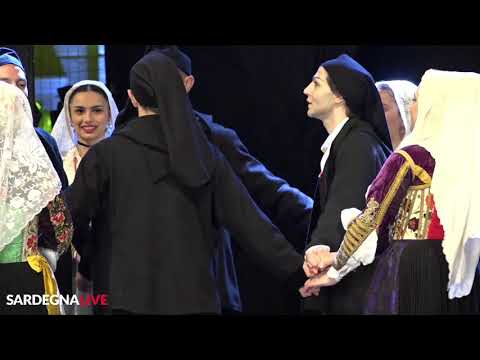
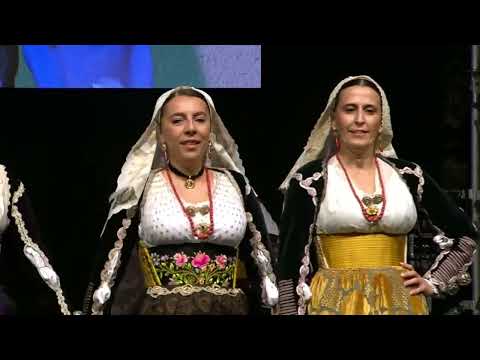
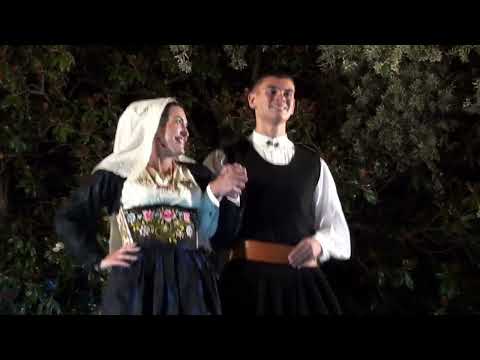
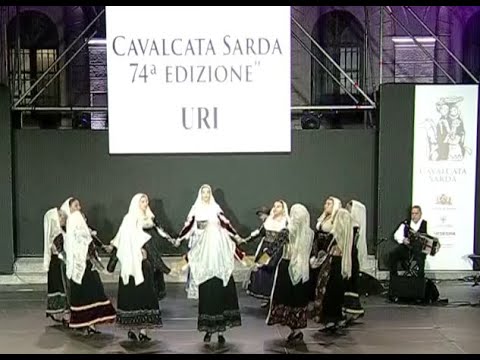
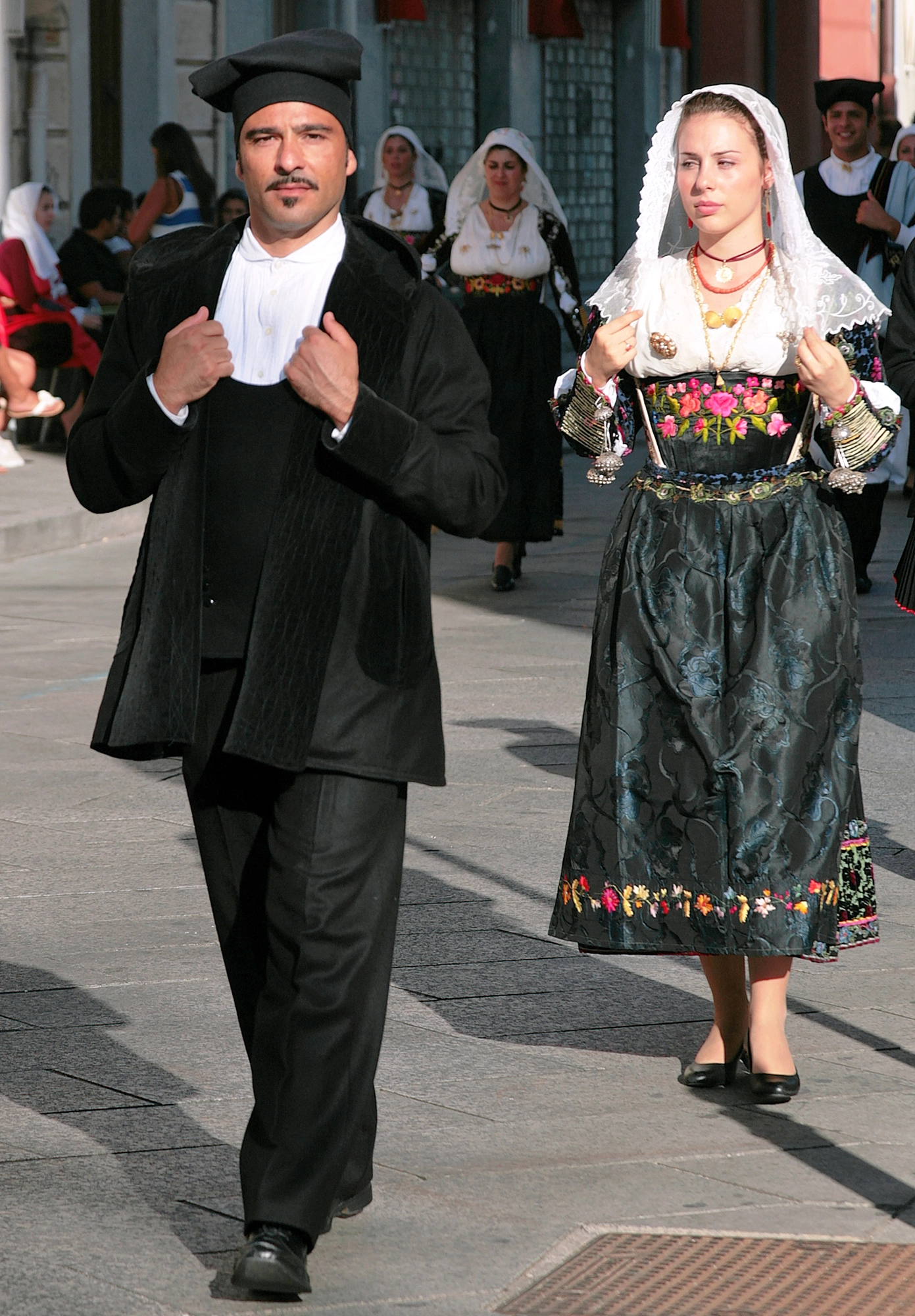
The headdress is a beige silk scarf with an embroidered white tulle border, known as su muccaloru ’e seda. The white cotton shirt (sa camisa) features embroidery at the collar and cuffs. The bodice (s’imbustu) is in silk satin, the same shade as the headdress and embroidered with flowers. The shoulder cover (su corittu) is in violet, black and green velvet with blue silk trim and cotton decorations, open sleeves and silver filigree buttons. A bib (sa pettiera) is worn across the front and tied beneath the chest. The pleated black cloth skirt (sa munnedda) features a velvet hem embroidered with flowers, paired with a blue damask silk apron edged in lace (su pannellu).
Men’s costume
The headdress (sa berritta) is a long tubular cap in black cloth, worn folded to the side. The white cotton shirt with pleats at the front (sa camisa) is paired with su cosso, a sleeveless double-breasted jacket in black cloth with embroidered seams. White trousers (sos calzones) are worn under a short black orbace skirt. The ensemble is completed by su cappottinu, a black orbace coat with a hood and velvet lapels.
Main fabrics
Velvet, Silk, Cloth, Orbace, Cotton
Occasion
Religious and patron-saint festivals
Events in Uri
-
2 – 3 October
Saint Francis View →