Historical background and roots of tradition
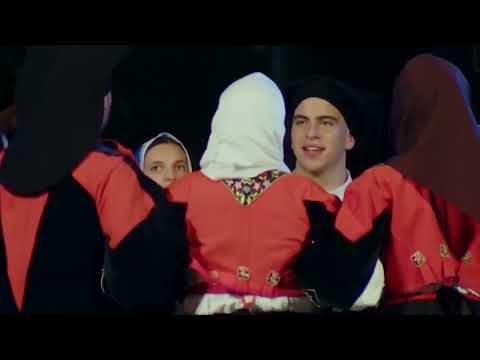
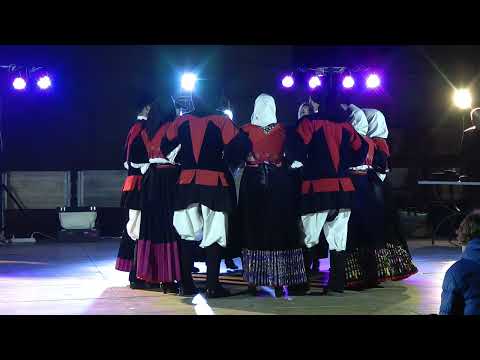
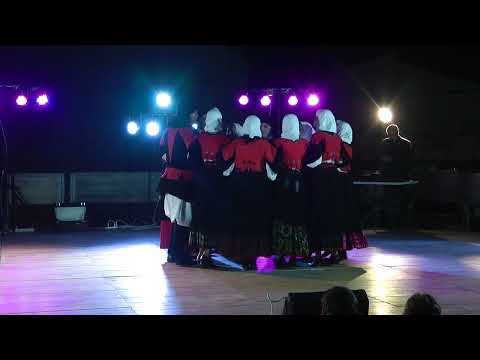
Sarule is a village in the Barbagia di Ollolai, in the mountainous heart of Sardinia, in the province of Nuoro, surrounded by cork oak forests and high-altitude pastures. The Sarule costume is structured with terminological rigour: every element has a precise name in Sardinian and follows codified rules handed down from generation to generation, with distinct variants for marital status — bride, married woman, widow — making the dress a refined system of social communication.
Women’s dress
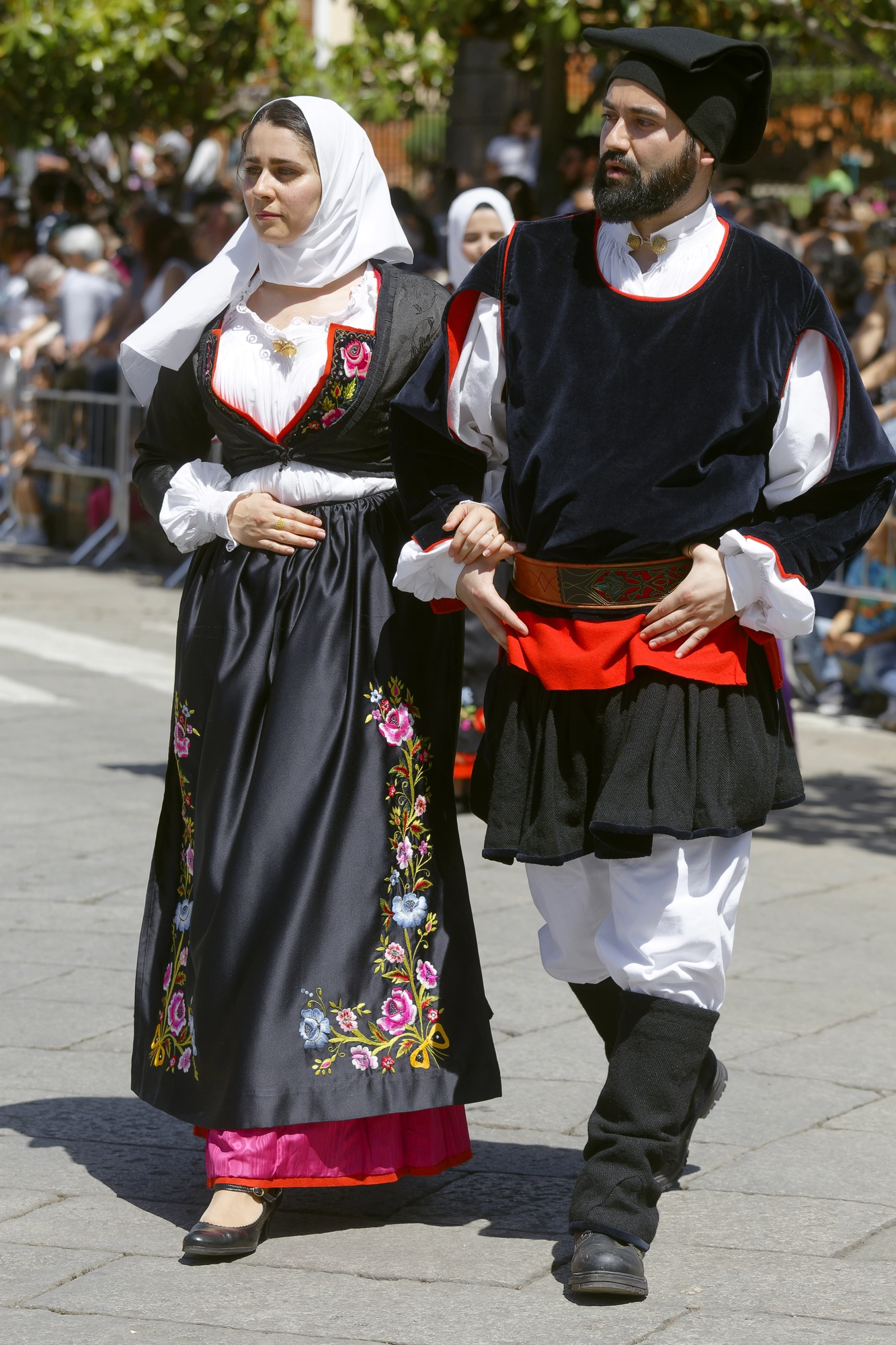
The bridal variant (ghestire de isposa) is identified by the white tivazzola (headband), a rectangular piece of cotton muslin about twenty-five centimetres wide and one metre twenty long; it frames the face passing several times under the chin clockwise and is pinned at ear level. The camisa (shirt) is white cotton muslin, pleated at the chest and embellished with drawn-thread embroidery (a trappanigiu) on the collar and cuffs; the fullness is reduced by a pleating embroidered with stylised geometric motifs (cori in mesu), and the collar is fastened with two silver filigree buttons.
The bodice, sinos or imbustu, is white polychrome floral brocade, edged with a fuchsia silk ribbon (sa vetta); made of three pieces joined at the back by a fixed lacing, its central section ends in a square point; it is lined with red woollen cloth and checked cotton and fastened at the front with hooks. The short jacket, zipponette, is black patterned silk with floral motifs, shaped and entirely edged with a black satin ribbon sewn in small pleats; the three-quarter sleeves leave the shirt cuffs visible and end in two points; it is fastened at the front with a hook.
The bridal outfit includes several skirts. Closest to the body is the odde ‘e pannu biancu (underskirt), white cotton edged with broderie anglaise lace. The odde is black orbace, fully pleated except for the front panel, with a flounce of black patterned silk satin with violet floral motifs and edged with red cloth. The odde ‘e pliccias is also black orbace, densely pleated, with a flounce of two ribbons of polychrome floral patterned cotton, black at the back and blue at the front. The vardetedda de seda is violet silk, finely and densely pleated except for the front panel covered by the apron, with a wide fuchsia silk flounce. The apron, codale or varda, is black patterned silk with fine stripes, edged with black lace and enriched with embroidery and polychrome glass beads on the lower part.
Men’s dress
The men’s everyday dress (ghestire de cada die) is defined above all by the berritta (cap), black woollen cloth, tubular with rounded edges, about ninety centimetres long; it is worn folded several times over itself and left to fall behind the head. The camisa (shirt) is white cotton muslin with an embroidered collar (a cori mesu), fastened with silver filigree buttons gilded and set with garnets; the fullness is reduced by gathering at the neckline and cuffs. The zippone (jacket) is red woollen cloth, double-breasted, with wide blue velvet panels at the front, on the sleeves and at the back where they end in a V; the sleeves have a wide opening from armhole to wrist through which the shirt emerges; it reaches below the waist. The peddes (waistcoat) is black lamb’s wool on the outside and brown leather on the inside, reversible; reaching just below the waist, it has one pocket per side on the outside and two per side on the inside.
The cartzones de ispicca (breeches) are white hand-woven cotton, wide and reaching to mid-calf, worn tucked into the gaiters. The cartzones de guresi (short skirt) are black orbace, pleated and edged with blue velvet, reaching to mid-thigh; sa letranca, a narrow strip of fabric, joins the front and back panels under the breeches. The cartzas (gaiters) are black orbace with a turned-down upper cuff and blue velvet edging on the lower part; they cover the calf, end rounded concealing part of the shoe, and are fastened with a lace below the knee. The shoes, cusinzos, are black leather ankle boots laced at the front; the belt, vrentera, is brown leather with wide overlapping pockets at the front.